

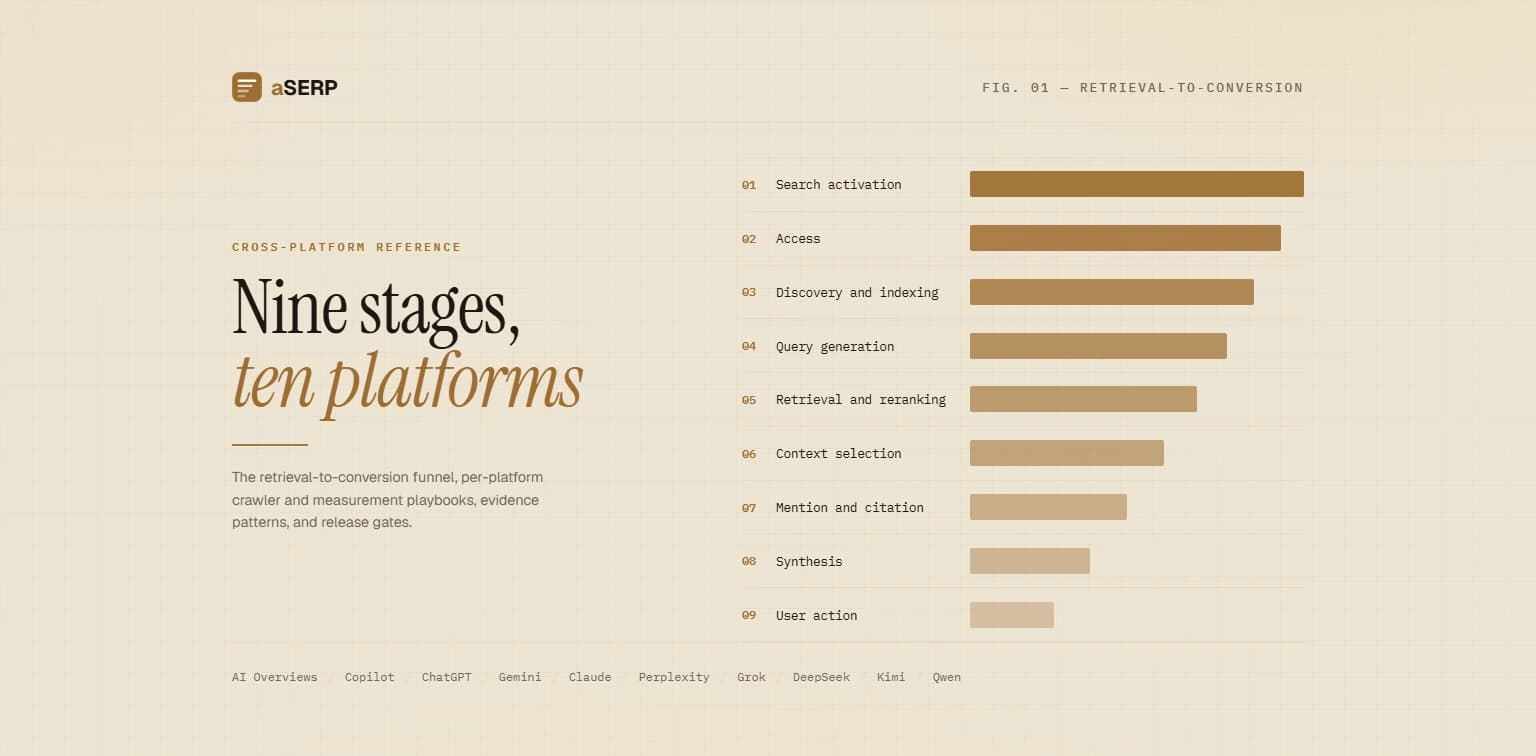
كيف تحسّن اكتشاف المحتوى واسترجاعه والاستشهاد به ودقة تمثيل الحقائق عبر ChatGPT Search، و Google AI Overviews و AI Mode، و Microsoft Copilot، و Gemini، و Claude، و Perplexity، و Grok، و DeepSeek، و Kimi، و Qwen.
آخر مراجعة: 11 أغسطس 2026
الظهور في البحث بالذكاء الاصطناعي (AI Search Visibility) ليس موضعًا واحدًا في الترتيب. بل هو حصيلة عملية متعددة المراحل قد يقرر فيها نظام الذكاء الاصطناعي البحث على الويب، ثم يُنشئ استعلام بحث واحدًا أو أكثر، ويسترجع مصادر مرشحة، ويختار الأدلة، ويولّف منها إجابة، ويضيف استشهادات بالمصادر، ويؤثر في إجراء لاحق ذي قيمة للأعمال.
يمكن أن تتعثر صفحة الويب في أي مرحلة. فقد تكون محجوبة عن الزحف، أو غائبة عن فهرس تعتمد عليه منظومة البحث، أو غير ذات صلة بالاستعلامات التي أعاد النظام صياغتها، أو تسبقها مصادر أخرى أثناء الاسترجاع، أو تُستبعد من سياق النموذج، أو تُستخدم دون الاستشهاد بها، أو يُستشهد بها مع تمثيل معلوماتها بصورة غير دقيقة.
لذلك، فإن الاستراتيجية الأقوى سندًا عبر المنصات واضحة:
أنشئ صفحات يسهل الوصول إليها تقنيًا، ومنظَّمة حول عناوين URL أساسية (Canonical URLs)، وغنية بالأدلة، وتجيب عن احتياجات حقيقية للمستخدمين؛ ووزّع البيانات سريعة التغير عبر خلاصات البيانات أو الأدوات المناسبة؛ وقِس كل مرحلة من الاسترجاع إلى التحويل.
لا يحل هذا محل تحسين محركات البحث (SEO). بل يوسّع نطاق تحسين محركات البحث التقني، وهندسة المعلومات، وجودة المحتوى، ووضوح الكيانات، والموثوقية الرقمية، والتحليلات، لتشمل بيئات البحث والإجابة التي يولّدها الذكاء الاصطناعي.
تصرّح Google بأن إرشاداتها الراسخة لتحسين محركات البحث تظل ذات صلة بميزتَي AI Overviews و AI Mode، اللتين تستخدمان الأنظمة القائمة في Google Search، وقد تتوسعان في الاستعلام إلى موضوعات فرعية ذات صلة. وبالمثل، تقول OpenAI إن ChatGPT Search يستطيع إعادة صياغة برومبت المستخدم إلى استعلامات بحث موجّهة والاستعانة بمزوّدي خدمات البحث. وتتيح منصات أخرى قدرات مماثلة للبحث على الويب أو استرجاع المعلومات، لكنها تختلف اختلافًا كبيرًا في شفافية عملها وفي الوثائق التي توفرها لمشرفي المواقع.
الملخص التنفيذي
بالنسبة إلى معظم المؤسسات، تتكون استراتيجية الظهور في البحث بالذكاء الاصطناعي الأعلى ثقة من ثمانية عناصر.
1. ابدأ بإتاحة الزحف وتوفير أهلية الاسترجاع
لا استشهاد من دون استرجاع.
ينبغي للصفحات ذات الأولوية أن:
- تُرجع استجابة HTTP مستقرة برمز الحالة 200.
- تكون متاحة للعامة عندما يكون الهدف اكتشافها علنًا.
- تتجنب الحجب غير المقصود بسبب قواعد الروبوتات، أو المصادقة، أو جدار حماية تطبيقات الويب (WAF)، أو شبكة توصيل المحتوى (CDN)، أو حدود معدل الطلبات.
- تستخدم عنوان URL أساسيًا ومستقرًا.
- تُدرج في خرائط موقع XML دقيقة.
- تتلقى روابط داخلية قابلة للزحف.
- تعرض المعلومات المهمة في نص يسهل الوصول إليه.
- تُعرض بصورة موثوقة على مختلف الأجهزة وفي بيئات الزواحف.
بالنسبة إلى Google AI Overviews و AI Mode، تنطبق ضوابط Googlebot المعتادة، وضوابط الفهرسة وأهلية إظهار المقتطفات. وتقول Google إنه لا توجد متطلبات تقنية إضافية للإدراج في هاتين التجربتين التوليديتين ضمن البحث.
2. اربط كل صفحة مهمة بنية حقيقية للمستخدم
قد تعيد أنظمة الذكاء الاصطناعي صياغة برومبت المستخدم أو توسّعه. وتسمّي Google ذلك التوسّع المتشعّب للاستعلام (Query Fan-out). وقد يجري ChatGPT Search أيضًا عملية بحث موجّهة واحدة أو أكثر. كما يمكن لآلية الاستناد إلى بحث Google في Gemini (Grounding with Google Search) إنشاء عدة استعلامات قبل بناء الإجابة.
لذلك، ينبغي للصفحة القوية ذات عنوان URL الأساسي أن تجيب عن الجوانب الطبيعية لنية المستخدم، مثل:
- ما الموضوع؟
- لمن يناسب؟
- كيف يعمل؟
- ما تكلفته؟
- متى تنطبق المعلومات؟
- ما البدائل المتاحة؟
- ما القيود المهمة؟
- ما الأدلة التي تدعم الاستنتاج؟
- ما القيود الجغرافية أو التقنية أو شروط الأهلية المنطبقة؟
لا يبرر ذلك إنشاء صفحة محدودة المحتوى لكل استعلام فرعي محتمل. بل يرجّح كفة الموارد المكتملة على الصفحات المتفرقة المبنية على صيغ متباينة للكلمات المفتاحية.
3. اجعل تحديد الحقائق المهمة والتحقق منها أمرًا سهلًا
استخدم:
- الأسماء الدقيقة للكيانات والمنتجات.
- تواريخ صريحة.
- الوحدات والنطاق الجغرافي.
- الأسعار والتوافر الحاليين، حيثما كان ذلك ذا صلة.
- تعريفات واضحة.
- معايير للمقارنة.
- منهجية موضحة.
- القيود.
- استشهادات بمصادر أولية.
- سجل تحديثات ظاهرًا.
وجدت دراسة مضبوطة عن الاستشهادات أُجريت في 2026، وشملت 252,000 تجربة تضم كل منها وثيقتين عبر ستة نماذج لغوية، أن الصلة بالموضوع وموضع الوثيقة في السياق كانا أقوى العوامل المختبرة تأثيرًا في اختيار الاستشهادات. كما ساعدت الأسعار الصريحة والطوابع الزمنية الحديثة في تلك السيناريوهات المضبوطة، بينما كان أثر التغييرات الشكلية وحدها محدودًا نسبيًا. وتنطبق هذه النتائج على وثائق سبق إدراجها في السياق المقدَّم للنموذج؛ ولا تثبت أن التعديلات نفسها ستؤدي إلى استرجاع عضوي بواسطة منتج فعلي للبحث بالذكاء الاصطناعي.
4. استثمر في معلومات يصعب على المنافسين إعادة إنتاجها
قد تشمل الأدلة الأصلية:
- مجموعات بيانات مملوكة للمؤسسة.
- اختبارات أداء مرجعية شفافة.
- استطلاعات ذات منهجية منشورة.
- مواصفات المنتجات.
- إجراءات تنفيذ جرى اختبارها.
- حاسبات.
- واجهات برمجة تطبيقات عامة (APIs).
- لقطات شاشة أصلية.
- تحليلات خبراء.
- تجارب قابلة لإعادة الإنتاج.
- دراسات حالة ذات أساليب قابلة للتحقق.
- مواد بحثية قابلة للتنزيل.
تركّز إرشادات Google الحالية للبحث التوليدي على المحتوى الفريد والقيّم وغير النمطي، وعلى الخبرة المباشرة، بدلًا من إنتاج إعادة صياغة على نطاق واسع يكون هدفها الأساسي جذب زيارات البحث.
5. افصل بين السماح بالوصول لأغراض البحث والموافقة على تدريب النماذج
تنشر عدة منصات هويات مختلفة للزواحف المخصصة للبحث، والاسترجاع الذي يطلبه المستخدم، وتدريب النماذج المحتمل.
على سبيل المثال:
- تميّز OpenAI بين OAI-SearchBot و ChatGPT-User و GPTBot.
- تميّز Anthropic بين Claude-SearchBot و Claude-User و ClaudeBot.
- تميّز Kimi بين Kimi-SearchBot و Kimi-User و KimiBot.
- تميّز Perplexity بين PerplexityBot و Perplexity-User.
يتيح ذلك للناشر السماح باكتشاف المحتوى في البحث، مع رفض بعض عمليات الزحف المخصصة للتدريب، وفق سياسته القانونية والتجارية وسياسة الترخيص.
6. لا تبتكر «مخطط بيانات منظَّمة للذكاء الاصطناعي»، ولا تعتمد على llms.txt
تصرّح Google بأنه لا يلزم استخدام بيانات منظَّمة خاصة بالذكاء الاصطناعي، أو ملف نصي خاص به، أو تنسيق خاص للصفحة، للظهور في AI Overviews أو AI Mode. كما أوضحت في 15 يونيو 2026 أن ملف llms.txt ليس له أثر إيجابي أو سلبي في الظهور أو الترتيب في Google Search.
تظل البيانات المنظَّمة المعتادة مفيدة عندما تصف بدقة المحتوى الظاهر في الصفحة. لكن ينبغي ألا تُعامل بوصفها إشارة تضمن الاستشهاد في إجابات الذكاء الاصطناعي.
7. تعامل مع الخلاصات والإضافات والتطبيقات وواجهات API والأدوات بوصفها قنوات ظهور منفصلة
من الأفضل توزيع بعض المعلومات عبر أنظمة منظَّمة أو تفاعلية، بدلًا من عرضها في نثر المقالات.
تشمل الأمثلة:
- خلاصات المنتجات.
- خلاصات المخزون.
- أنظمة الحجز.
- واجهات API العامة.
- التطبيقات المتصلة.
- الإضافات.
- خوادم بروتوكول سياق النموذج (Model Context Protocol أو MCP).
- أنظمة الاسترجاع الخاصة.
- الحاسبات.
- أدوات تنفيذ المعاملات.
توفر OpenAI خلاصات منتجات منظَّمة تتيح للمشاركين المعتمدين تزويدها بأسعار وتوافر ومعرّفات وسمات دقيقة للمنتجات. كما يوفّر دليل الإضافات من OpenAI، Plugin Directory، مسارًا منفصلًا للتطبيقات المتصلة والمهارات والقوالب. ولا ينبغي وصف أي من الآليتين بأنها عامل ترتيب عضوي لصفحة ويب عامة.
8. قِس المسار كاملًا من الاسترجاع إلى التحويل
لا تكتفِ بالسؤال: «كم بلغ حجم زيارات الإحالة التي تلقيناها من الذكاء الاصطناعي؟»
قِس:
- تفعيل البحث.
- الاسترجاع.
- مرات الذكر.
- الاستشهادات.
- حصة الاستشهادات.
- بروز الاستشهادات.
- تغطية نيات المستخدم.
- دقة تمثيل الحقائق.
- تأخر وصول التحديثات.
- نجاح طلبات الزواحف.
- جلسات الإحالة.
- التحويلات المؤهلة.
- النتائج التي أسهم الظهور في تحقيقها.
توفر Google و Microsoft الآن تقارير مخصصة للبحث التوليدي. وتضيف OpenAI المعلمة utm_source=chatgpt.com إلى روابط الإحالة من ChatGPT. ويمكن أيضًا مراقبة المنصات التي تنشر هويات زواحفها من خلال سجلات الخادم.
ترتيب الأولويات لمعظم المواقع
| الأولوية | الاستثمار | سبب الأهمية |
|---|---|---|
| P0 | إتاحة الزحف، والفهرسة، وتحديد عناوين URL الأساسية، وعرض المحتوى، والسماح بالوصول عبر WAF و CDN | الصفحة التي لا يمكن الوصول إليها أو استرجاعها لا تستطيع دعم الإجابة بصورة موثوقة |
| P0 | صفحات ذات عناوين URL أساسية تتوافق مع نيات مستخدمين ذات قيمة | الصلة بالموضوع شرط أساسي في أنظمة البحث والاسترجاع |
| P0 | أدلة أصلية، وحقائق دقيقة، ومواصفات حالية، ومصادر أولية | تمنح الأدلة المتميزة الناس وأنظمة الاسترجاع سببًا لتفضيل الصفحة |
| P1 | عناوين واضحة، ومحتوى نصي، واتساق في أسماء الكيانات، وبيانات التأليف، وبيانات منظَّمة ملائمة | يحسّن ذلك الفهم وإمكانية الوصول والأهلية للظهور في البحث التقليدي |
| P1 | حوكمة الزواحف بحسب المنصة ومراقبة السجلات | يمنع الاستبعاد غير المقصود ويكشف الأعطال التشغيلية |
| P1 | اختبارات متكررة للظهور على مستوى البرومبت | تميّز بين مشكلات الاسترجاع والاستشهاد والذكر والدقة |
| P2 | خلاصات المنتجات، وواجهات API، والتطبيقات، والإضافات، وأدوات MCP، حيثما كانت مناسبة | تضيف مسارات توزيع منظَّمة أو تفاعلية تتجاوز صفحات الويب العامة |
| P3 | تجارب مضبوطة على الملخصات أو الجداول أو ملفات llms.txt الاختيارية | قد تساعد في حالات محددة، لكن ينبغي ألا تسبق العمل الأساسي على الجوانب التقنية والأدلة |
| تجنّب | الإيحاء الزائف بحداثة المحتوى، وأسماء الروبوتات المختلقة، وحشو الكلمات المفتاحية، والإنتاج الكثيف لصفحات الأسئلة الشائعة، وإساءة استخدام البيانات المنظَّمة، والاستشهادات الملفقة | يضيف مخاطر من دون أدلة موثوقة على منفعة مستدامة |
ما المقصود فعلًا بالظهور في البحث بالذكاء الاصطناعي؟
الظهور في البحث بالذكاء الاصطناعي هو مدى استرجاع شخص أو مؤسسة أو منتج أو صفحة ويب أو ادعاء واقعي، أو تمثيله، أو ذكره، أو التوصية به، أو الاستشهاد به، في إجابة مولَّدة بالذكاء الاصطناعي.
وهو يشمل أكثر من النقرات. فقد يسهم مصدر في تشكيل الإجابة من دون أن يتلقى زيارة. وقد تُذكر شركة من دون رابط. وقد تحصل صفحة على استشهاد، لكن تُعرض معلوماتها بصورة غير دقيقة. وقد يسترجع النموذج صفحة الشركة، ثم يوصي بمنافس لها.
لذلك، يجب أن يميّز إطار القياس المفيد بين مراحل الظهور ونتائجه.
تحسين محركات البحث ومحركات الإجابة والمحركات التوليدية والظهور في البحث بالذكاء الاصطناعي
تتداخل هذه المصطلحات، لكنها ليست متطابقة.
تحسين محركات البحث
يعمل تحسين محركات البحث (SEO) على تحسين:
- الزحف.
- الفهرسة.
- تحديد عناوين URL الأساسية (Canonicalization).
- الصلة بالاستعلام.
- طريقة العرض في نتائج البحث.
- اكتشاف الروابط.
- تجربة المستخدم.
- الزيارات العضوية.
- أداء التحويلات.
تحسين محركات الإجابة
يركّز تحسين محركات الإجابة (AEO) على جعل المعلومات:
- صالحة لتقديم إجابة مباشرة.
- واضحة التعريف.
- خالية من الالتباس الدلالي.
- سهلة الاسترجاع.
- سهلة التلخيص.
- مصحوبة بالقيود والتوضيحات اللازمة.
تحسين المحركات التوليدية
يُستخدم تحسين المحركات التوليدية (GEO) عادةً لوصف الجهود الرامية إلى تحسين:
- تمثيل العلامة التجارية.
- اختيار المصادر.
- مرات الذكر.
- الاستشهادات.
- الإدراج ضمن التوصيات.
- الحصة من محتوى الإجابة.
الظهور في البحث بالذكاء الاصطناعي
الظهور في البحث بالذكاء الاصطناعي هو النتيجة القابلة للقياس عبر جميع الأنظمة والمراحل ذات الصلة.
ويمكن تلخيص العلاقة العملية على النحو الآتي:
يهيئ تحسين محركات البحث التقني أهلية الاسترجاع. ويحسّن تصميم المحتوى والأدلة مدى الصلة والفائدة. ويزيد تحسين محركات الإجابة قابلية استخدام المعلومات في الإجابات. وتفحص اختبارات تحسين المحركات التوليدية التمثيل والاستشهادات. وتحدد التحليلات ما إذا كان أي من ذلك يخلق قيمة.
إن القول إن على المؤسسات الاختيار بين SEO و GEO يقيم تعارضًا زائفًا. فإرشادات Google الرسمية تنص تحديدًا على أن ممارسات تحسين محركات البحث الراسخة تظل ذات صلة بميزات البحث التوليدي لديها.
المسار من الاسترجاع إلى التحويل
ينبغي إدارة الظهور في الذكاء الاصطناعي بوصفه مسارًا متعدد المراحل، لا موضعًا في الترتيب.
| المرحلة | ما يفعله النظام | الإخفاق الشائع | مؤشر التشخيص الأساسي |
|---|---|---|---|
| 1. تفعيل البحث | يقرر ما إذا كانت هناك حاجة إلى معلومات خارجية حديثة | لا يُجرى بحث على الويب العام | معدل تفعيل البحث |
| 2. الوصول | يطلب المصدر عبر زاحف أو أداة جلب تُفعَّل بطلب المستخدم | تمنع قواعد الروبوتات أو المصادقة أو WAF أو حدود معدل الطلبات أو الأخطاء الوصول | معدل نجاح طلبات الزواحف |
| 3. الاكتشاف والفهرسة | يضيف عنوان URL أو يتعرف عليه بوصفه مرشحًا للاسترجاع | ضعف الروابط، أو التكرار، أو غياب التغطية في خريطة الموقع، أو الاستبعاد من الفهرسة | تغطية الصفحات المفهرسة والمرشحة |
| 4. توليد الاستعلامات | يعيد صياغة البرومبت الأصلي أو يوسّعه | لا يجيب المصدر عن الاستعلامات الفرعية المولَّدة | تغطية الصفحات للاستعلامات |
| 5. الاسترجاع وإعادة الترتيب | يختار الوثائق المرشحة | تكون المصادر المنافسة أكثر صلة أو موثوقية أو إتاحة أو حداثة | معدل الاسترجاع |
| 6. اختيار السياق | يختار المعلومات التي تُقدَّم إلى النموذج | تُسترجع الصفحة، لكنها تُستبعد من السياق القابل للاستخدام | الإدراج في السياق، حيث يمكن رصده |
| 7. الذكر والاستشهاد | يختار الكيانات والمصادر التي تُنسب إليها المعلومات | يؤثر المصدر في الإجابة، لكنه لا يُذكر ولا يُستشهد به | معدلا الذكر والاستشهاد |
| 8. توليف الإجابة | ينتج الإجابة النهائية | تُحرَّف الحقائق أو تُدمج أو تصبح قديمة أو تُحذف قيودها | دقة تمثيل الحقائق |
| 9. إجراء المستخدم | يؤدي إلى نقرة، أو بحث عن العلامة، أو عميل محتمل، أو عملية بيع، أو إجراء لاحق | لا ينتج عن الظهور أثر ذو صلة بالأعمال | مقاييس الإحالة والتحويل |
لا تتيح كل منصة الاطلاع على كل مرحلة. وهذا المسار نموذج تشخيصي، وليس ادعاءً بأن جميع منتجات الذكاء الاصطناعي تستخدم بنية تقنية واحدة متطابقة.
المرحلة 1: تفعيل البحث
قد يجيب نظام الذكاء الاصطناعي من دون البحث المباشر على الويب العام.
ومن الأسباب المحتملة:
- أن يبدو السؤال متعلقًا بمعلومات مستقرة أو غير مرتبطة بزمن.
- أن يقدّر النموذج أن لديه بالفعل معلومات كافية.
- أن يكون البحث معطّلًا.
- ألا يستخدم الوضع المحدد الاسترجاع من الويب العام.
- أن تعتمد الإجابة على ملفات متصلة، أو بيانات خاصة، أو أداة أخرى.
- أن يقرر النظام، على نحو غير صحيح، أن المعلومات الآنية غير ضرورية.
لا يمكن استرجاع موقع في تشغيل لا يحدث فيه أصلًا بحث ذو صلة على الويب العام. وهذا يختلف عن تشغيل يُفعَّل فيه البحث، لكن لا يُختار الموقع.
تتبّع هاتين النتيجتين بصورة منفصلة.
المرحلة 2: الوصول
بمجرد تفعيل الاسترجاع، يجب أن يستطيع النظام الوصول إلى المصدر.
تشمل العوائق الشائعة:
- robots.txt.
- noindex.
- nosnippet.
- متطلبات المصادقة.
- حواجز الموافقة أو الصفحات البينية.
- اختبارات التحقق من الروبوتات.
- قواعد WAF.
- قيود CDN.
- الحجب الجغرافي.
- الاستجابات المستمرة برموز 403 أو 429 أو 5xx.
- خلل TLS.
- فشل عرض المحتوى.
- إتاحة المحتوى فقط بعد تفاعل غير مدعوم.
- عناوين URL غير المستقرة.
تذكر Google أن الصفحات المستخدمة في AI Overviews و AI Mode يجب أن تكون مفهرسة ومؤهلة للظهور مع مقتطف. وتنطبق ضوابط Google Search المعتادة، بما فيها noindex و nosnippet و data-nosnippet و max-snippet.
المرحلة 3: الاكتشاف والفهرسة
إتاحة الوصول للزاحف لا تضمن الاكتشاف أو الفهرسة.
قد يظل تمثيل الصفحة ضعيفًا للأسباب الآتية:
- لا توجد روابط تشير إليها.
- لم تُدرج في خريطة الموقع.
- تكرر محتوى عنوان URL آخر.
- تتعارض إشارات تحديد عنوان URL الأساسي.
- ينتج الموقع أعدادًا كبيرة من عناوين URL منخفضة القيمة.
- تبدو الصفحة يتيمة.
- تستخدم الروابط الداخلية نصوصًا برمجية يتعذر الوصول إليها، بدلًا من عناصر روابط قابلة للزحف.
- يكون المحتوى محدودًا قياسًا بالاستعلام المستهدف.
- يتغير عنوان URL باستمرار.
تصف Google الزحف والفهرسة وعرض النتائج بأنها مراحل منفصلة، ولا تضمن فهرسة كل صفحة يمكن الوصول إليها أو عرضها.
قد تختلف قواعد الاكتشاف في الأنظمة التي تستخدم فهارس مملوكة لها أو مزوّدي خدمات بحث. ومع ذلك، تظل عناوين URL المستقرة، والروابط الداخلية، وخرائط الموقع الدقيقة، والظهور الواسع في البحث، نقطة الانطلاق الأكثر أمانًا عبر المنصات.
المرحلة 4: إعادة صياغة الاستعلام والتوسّع المتشعّب فيه
قد لا يكون برومبت المستخدم الأصلي هو الاستعلام المستخدم للاسترجاع.
تقول Google إن AI Overviews و AI Mode قد يستخدمان التوسّع المتشعّب للاستعلام، بإجراء عدة عمليات بحث عبر موضوعات فرعية ومصادر بيانات ذات صلة. وتقول OpenAI إن ChatGPT Search قد يعيد صياغة البرومبت إلى عملية بحث موجّهة واحدة أو أكثر. وقد تكشف بيانات الاستناد إلى المصادر في Gemini عن استعلامات البحث التي جرى توليدها.
لنأخذ هذا البرومبت:
ما أفضل نظام مضخات حرارية صناعية لمنشأة لتصنيع الأغذية في نيويورك؟
قد يتفرع هذا البرومبت في نظام الاسترجاع إلى أسئلة تتعلق بما يأتي:
- الشركات المصنّعة للمضخات الحرارية الصناعية.
- نطاقات درجات الحرارة الملائمة.
- القيود المتعلقة بمواد التبريد.
- الحوافز المتاحة في نيويورك.
- تكاليف التركيب.
- متطلبات النظافة الصحية في الصناعات الغذائية.
- معامل الأداء الموسمي.
- القدرات المتاحة.
- تغطية الخدمة المحلية.
- بدائل مثل استرداد الحرارة المهدرة.
ليست الخلاصة العملية أن تنشر عشر صفحات سطحية. بل أن تضمن إجابة مورد موثوق واحد، أو مجموعة موارد مترابطة بإحكام، عن معايير القرار ذات المعنى.
المرحلة 5: الاسترجاع وإعادة الترتيب
قد يكون المصدر مفهرسًا، لكنه لا يُسترجع.
ومن الأسباب المحتملة:
- ضعف الصلة بالموضوع.
- غموض المصطلحات.
- عدم اكتمال التغطية.
- تقادم المعلومات.
- ضعف الملاءمة الجغرافية.
- تعارض إصدارات المنتج.
- تعذّر الوصول إلى المحتوى الرئيسي.
- وجود مصادر أولية أكثر موثوقية.
- وجود أدلة أقوى لدى المنافسين.
- عدم وضوح المؤلف أو المنهجية.
- قيود على النطاقات أو المصادر مرتبطة باستعلام محدد.
تظل الصلة بالموضوع عاملًا مهمًا بصورة متكررة. ففي دراسة الاستشهادات المضبوطة لعام 2026، كانت الصلة بالموضوع أقوى العوامل المختبرة على مستوى الوثيقة. كما وجدت المراجعة الأوسع لأدبيات تحسين المحركات التوليدية في 2026 أن نتائج الصلة بالموضوع وموضع المعلومات في السياق كانت أكثر قابلية للتكرار من القواعد الإرشادية العامة المتعلقة بالتنسيق.
المرحلة 6: اختيار السياق
قد تعثر أنظمة الاسترجاع على وثائق أكثر مما يستطيع النموذج استخدامه.
وقد تحدد مرحلة منفصلة للاختيار أو الضغط المقاطع التي تدخل إلى السياق النهائي. وينشأ عن ذلك نوع آخر من الإخفاق: قد يكتشف النظام صفحة، من دون أن يزوّد النموذج بما يكفي منها لدعم الاستشهاد بها.
حسّن فائدة الصفحة في هذه المرحلة من خلال:
- إبقاء كل قسم مركّزًا على موضوعه.
- وضع الأدلة بجوار الادعاء الذي تدعمه.
- استخدام عناوين وصفية.
- تحديد النطاق والتواريخ.
- تجنّب النسخ المتناقضة.
- تسمية الجداول بوضوح.
- إبقاء المعلومات الأساسية متاحة في صورة نصية.
- الربط بالأدلة الأولية.
- فصل الاستنتاجات عن الافتراضات.
لا تفهم ذلك على أنه اشتراط لتقسيم كل فقرة إلى «وحدات» صغيرة جدًا. فـGoogle تقول صراحةً إن ميزات البحث التوليدي لديها لا تتطلب تقسيمًا خاصًا للمحتوى أو إعادة كتابة مخصصة للذكاء الاصطناعي.
المرحلة 7: اختيار الذكر والاستشهاد
الاسترجاع لا يضمن الاستشهاد.
فقد يقوم النظام بما يأتي:
- يستخدم مصدرًا من دون الاستشهاد به بصورة ظاهرة.
- يستشهد بمصدر واحد لادعاء تدعمه عدة مصادر.
- يذكر شركة من دون رابط إليها.
- يستشهد بوسيط بدلًا من المصدر الأصلي.
- يستشهد بصفحة لإثبات حقيقة واحدة، لا لدعم التوصية.
- يدرج الصفحة في لوحة المصادر، لكنه لا يضع لها استشهادًا داخل النص.
- يغيّر الاستشهادات عند تكرار البرومبت.
تتبّع أربع نتائج منفصلة على الأقل:
- الاسترجاع: هل عُثر على المصدر؟
- الذكر: هل ورد اسم الكيان؟
- الاستشهاد: هل نُسبت المعلومات إلى المصدر؟
- البروز: ما مدى تأثير الاستشهاد أو وضوح ظهوره؟
المرحلة 8: توليف الإجابة ودقة تمثيل الحقائق
الاستشهاد ليس نتيجة إيجابية تلقائيًا.
فقد تتضمن الإجابة النهائية ما يأتي:
- نقل سعر قديم.
- دمج إصدارين من منتج.
- حذف شرط من شروط الأهلية.
- نسبة ادعاء موزّع إلى الشركة المصنّعة.
- التعامل مع رأي بوصفه حقيقة.
- التوصية بمنتج خارج نطاق استخدامه المقصود.
- الخلط بين مؤسسات ذات أسماء متشابهة.
- حذف تحفظ مهم متعلق بالمخاطر.
- الاستشهاد بمصدر لا يدعم الادعاء المولَّد.
لذلك، ينبغي أن تكون دقة تمثيل الحقائق مؤشرًا أساسيًا.
وعند تقييم كل عبارة جوهرية عن المؤسسة، اسأل:
- هل هي صحيحة؟
- هل هي حديثة؟
- هل نُسبت إلى مصدرها على نحو صحيح؟
- هل تحافظ على قيود المصدر وتحفظاته؟
- هل تصف المنتج والسوق والإصدار الصحيح؟
- هل الصفحة المستشهد بها دليل مناسب؟
المرحلة 9: نتائج الأعمال
يمكن للظهور في الذكاء الاصطناعي أن يخلق قيمة من خلال:
- جلسات الإحالة.
- الاشتراكات في النشرات البريدية.
- تجارب المنتجات.
- العملاء المحتملين للمبيعات.
- عمليات الشراء.
- عمليات البحث عن العلامة التجارية.
- الزيارات المباشرة اللاحقة.
- عملاء محتملين أكثر اطلاعًا.
- تقليل العوائق في تجربة الدعم.
- اكتشاف المؤسسة من جانب شركاء أو جهات إعلامية.
تحدث بعض الآثار من دون نقرة يمكن نسبتها إلى المصدر فورًا. لكن ينبغي للمؤسسات ألا تصف كل زيادة في الزيارات المباشرة أو عمليات البحث عن العلامة بأنها «تحويل عبر مسار خفي للذكاء الاصطناعي». فنسبة النتائج التي أسهم الظهور في تحقيقها تتطلب منهجية يمكن الدفاع عنها.
ما الذي تثبته الأبحاث، وما الذي لا تثبته؟
الأدلة الأكاديمية المتعلقة بتحسين المحركات التوليدية مفيدة، لكن نطاقها أضيق مما توحي به أدلة تجارية كثيرة.
الدراسة التأسيسية لتحسين المحركات التوليدية
قدّمت الورقة التأسيسية، التي أُرسلت أول مرة في نوفمبر 2023 ثم قُبلت في مؤتمر KDD 2024، معيار GEO-bench، وقيّمت أساليب تستهدف زيادة ظهور المصادر في الإجابات التوليدية. وأفادت بتحسّن يصل إلى نحو 40% ضمن بعض أجزاء إطارها التجريبي.
لا ينبغي إعادة صياغة هذه النتيجة على أنها:
- زيادة مضمونة بنسبة 40% في الزيارات.
- أثر ثابت في الترتيب عبر المنصات الحالية.
- دليل على أن تعديلًا واحدًا يحسّن الأداء في كل نموذج.
- دليل على أن الصفحة المعدلة ستُكتشف بصورة عضوية.
- دليل على أثر مستدام في الإيرادات.
قيّمت التجربة ظروفًا محددة للاسترجاع والتوليد. ولم تثبت وجود معادلة ترتيب عامة للأنظمة الفعلية.
المراجعة النقدية لعام 2026
فحصت مراجعة نُشرت في يوليو 2026 عددًا قدره 45 دراسة منشورة بين 2023 و 2026. ووصفت تحسين المحركات التوليدية بأنه عملية احتمالية متعددة المراحل، وحذّرت من أن دراسات كثيرة تقيّم المحتوى بعد استرجاعه، بدلًا من اختبار ما إذا كان محرك فعلي يكتشف الصفحة بصورة عضوية. ولم تجد المراجعة بين الأساليب التي فحصتها أي أسلوب ذي أثر سببي ثابت، ممتد زمنيًا وعابر للمنصات، في قابلية الاكتشاف العضوي أو سلوك المستخدم اللاحق.
لا يعني ذلك أن التحسين عديم الجدوى. بل يعني أن الاستنتاجات يجب أن تظل مرتبطة بالمرحلة التي تخصها.
على سبيل المثال:
- قد يحسّن تعديل ما اختيار الاستشهادات بعد الاسترجاع.
- قد لا يؤثر التعديل نفسه في الاكتشاف.
- قد تقلل إعادة صياغة موجَّهة نحو الاستشهادات من الصلة في البحث المعتاد.
- قد يزيد تغيير ما مرات الذكر من دون أن يولّد زيارات.
- قد لا تحسّن زيادة الزيارات التحويلات المؤهلة.
أبحاث مضبوطة عن اختيار الاستشهادات
قيّمت دراسة «What Gets Cited» المنشورة في مايو 2026 عددًا قدره 252,000 تجربة مضبوطة عبر ستة نماذج. ووجدت أن:
- الصلة بالموضوع كان لها أقوى أثر بين العوامل المختبرة.
- موضع الوثيقة في السياق المقدَّم أثّر بصورة جوهرية في الاستشهاد الأول.
- معلومات السعر الصريحة ساعدت في السيناريوهات ذات الصلة.
- الطوابع الزمنية الحديثة ساعدت في السيناريوهات الحساسة للوقت.
- اكتمال المحتوى وإشارات الثقة أحدثا آثارًا أصغر.
- التغييرات الشكلية في التنسيق كان تأثيرها محدودًا نسبيًا.
كانت الوثائق قد قُدّمت بالفعل إلى النماذج. وهذه نتائج تتعلق باختيار الاستشهادات، وليست عوامل ترتيب معلنة للأنظمة الفعلية.
تسلسل عملي لقوة الأدلة
استخدم التسلسل الآتي عند تقييم النصائح المتعلقة بالبحث بالذكاء الاصطناعي.
| فئة الدليل | معناها | مثال |
|---|---|---|
| إرشادات رسمية من المنصة | توثّق المنصة السلوك علنًا | التوسّع المتشعّب للاستعلام في Google؛ و OAI-SearchBot؛ و Claude-SearchBot |
| بحث مضبوط | تثبت تجربة أثرًا في ظروف محددة | تفضيل الاستشهاد بين وثائق سبق استرجاعها |
| استنتاج تشغيلي قوي | تنبني التوصية على مبادئ راسخة في الاسترجاع والنشر | عناوين URL أساسية مستقرة وأسماء كيانات واضحة |
| فرضية قابلة للاختبار | يبدو الأسلوب معقولًا، لكنه غير مثبت عبر الأنظمة الفعلية | أن يزيد تصميم محدد للجداول معدل الاستشهاد |
| ادعاء غير مسند | تكون الأدلة غائبة أو مستخدمة في غير موضعها أو مناقضة للادعاء | أن يضمن مخطط بيانات منظَّمة عام للذكاء الاصطناعي الحصول على استشهادات |
مقارنة بين المنصات
| المنصة | المسار الموثَّق إلى الويب العام | الضوابط الرسمية المتاحة لأصحاب المواقع | محور التحسين الأعلى ثقة | أفضل وسائل القياس المتاحة |
|---|---|---|---|---|
| Google AI Overviews و AI Mode | فهرس Google Search وأنظمة الترتيب والتوسّع المتشعّب للاستعلام | Googlebot وضوابط الفهرسة والمقتطفات المعتادة في Search | تحسين محركات البحث التقني التقليدي، والأدلة الفريدة، والتلبية الكاملة لنية المستخدم | تقرير Generative AI في Search Console، إلى جانب Search Console المعتاد |
| Microsoft Copilot وإجابات Bing بالذكاء الاصطناعي | بنية Bing التحتية للبحث والاستناد إلى المصادر | Bingbot و robots.txt و Bing Webmaster Tools و IndexNow | قابلية الفهرسة في Bing، والتحديثات الدقيقة، والأدلة الواضحة | تقرير AI Performance في Bing Webmaster Tools |
| ChatGPT Search | بنية OpenAI التحتية للبحث واستعلامات مزوّدي البحث | OAI-SearchBot؛ و ChatGPT-User؛ أما GPTBot فمنفصل عنهما | إتاحة الوصول لـOAI-SearchBot، وقابلية الاكتشاف الواسعة في البحث، وجودة المصادر | استشهادات ChatGPT، والإحالات، وسجلات الزواحف |
| Gemini | الاستناد إلى بحث Google في التجارب المدعومة، إلى جانب أدوات ومصادر بيانات أخرى | لم توثّق المصادر التي خضعت للمراجعة زاحفًا منفصلًا موجّهًا لمشرفي المواقع خاصًا بمنتج Gemini للمستهلكين | الظهور في Google Search، إلى جانب اختبارات خاصة بـGemini | بيانات الاستناد إلى المصادر، وعناوين URL المستشهد بها، والاختبارات المتكررة |
| Claude | بحث Claude على الويب والاسترجاع بطلب المستخدم | Claude-SearchBot و Claude-User و ClaudeBot | إتاحة زاحف البحث، والأدلة التقنية الدقيقة، والقيود الواضحة | سجلات الزواحف، والإحالات، واختبارات Claude المتكررة |
| Perplexity | فهرس بحث Perplexity والبحث الآني ذي النتائج المرتبة | PerplexityBot و Perplexity-User | إتاحة وصول الزاحف مع التحقق من هويته، وصفحات مكتملة مدعومة بالمصادر | سجلات الروبوتات، والإحالات، و Search API، وتدقيق المصادر |
| Grok | أداتا Web Search و X Search من xAI | لم يُعثر على مواصفات رسمية مماثلة لزاحف موجّه إلى مشرفي المواقع | قابلية الاكتشاف الواسعة على الويب، ومصادر موثوقة منشورة مباشرة من أصحابها على الويب و X | استشهادات الويب و X، والإحالات، والاختبارات المضبوطة |
| DeepSeek | بحث على الويب من جهة الخادم وخدمات بحث خارجية | لم يُعثر على مواصفات رسمية عامة لزاحف موجّه إلى مشرفي المواقع | سلامة ممارسات البحث العامة والاختبار التجريبي للمصادر | مخرجات البحث المفعَّل، والإحالات، والسجلات الخام |
| Kimi | فهرس بحث Kimi والاسترجاع المباشر بطلب المستخدم | Kimi-SearchBot و Kimi-User و KimiBot | إتاحة SearchBot، وموثوقية المصادر، والاختبارات متعددة اللغات | سجلات الزواحف، واختبارات Kimi Search و Deep Research |
| Qwen | البحث على الويب واستخراج المحتوى و Deep Research عبر Alibaba Cloud | لم يُعثر على مواصفات رسمية عامة لزاحف Qwen موجّه إلى مشرفي المواقع | صفحات مستقرة يسهل استخراج محتواها، واختبار المصادر الظاهرة في المخرجات | نتائج المصادر في واجهات API من Alibaba Cloud، والبرومبتات المتكررة |
تستند الفروق بين المنصات أعلاه إلى الوثائق الرسمية الحالية التي تمت مراجعتها حتى 11 أغسطس 2026. وبالنسبة إلى xAI و DeepSeek و Qwen، ينبغي التعامل مع عدم العثور على مواصفات رسمية مماثلة لزاحف موجّه إلى مشرفي المواقع بوصفه فجوة حالية في التوثيق، لا دليلًا على عدم وجود زاحف أو نظام بحث تعتمد عليه المنصة.
خطط العمل بحسب المنصة
Google AI Overviews و AI Mode
توفر Google أوضح الإرشادات لمشرفي المواقع بشأن البحث التوليدي.
تقول Google إن AI Overviews و AI Mode:
- يستخدمان أنظمة الترتيب والجودة القائمة في Google Search.
- قد يستخدمان التوسّع المتشعّب للاستعلام.
- يتطلبان الفهرسة المعتادة وأهلية إظهار المقتطفات.
- لا يتطلبان ترميزًا خاصًا بالذكاء الاصطناعي.
- لا يتطلبان نسخة منفصلة من الصفحة للذكاء الاصطناعي.
- لا يتطلبان llms.txt.
- يظلان خاضعين لسياسات Google المتعلقة بالمحتوى غير المرغوب فيه.
- يمكن التحكم فيهما عبر توجيهات Search المعتادة.
وتوصي Google أيضًا بمحتوى فريد يلبّي حاجة المستخدم، ومعلومات نصية واضحة، وصور وفيديوهات مفيدة، وبيانات منظَّمة تتطابق مع الصفحة الظاهرة.
الإجراءات الأعلى ثقة لتحسين الظهور في Google
- عالج مشكلات الزحف والعرض وعناوين URL الأساسية والفهرسة.
- تأكد من أهلية الصفحة لإظهار مقتطف في البحث.
- اربط الصفحات ذات الأولوية باحتياجات حقيقية للمستخدمين.
- انشر معلومات متميزة مستمدة من خبرة مباشرة.
- حافظ على حداثة الحقائق سريعة التغير، مع إظهار تواريخها.
- استخدم روابط داخلية قابلة للزحف.
- أضف صورًا أو فيديوهات مفيدة عندما يستفيد منها الموضوع.
- طبّق البيانات المنظَّمة الملائمة فقط.
- تجنّب إنتاج صفحات على نطاق واسع يكون هدفها الأساسي استهداف اختلافات طفيفة في الاستعلامات.
- راقب تقرير Generative AI في Search Console.
Google-Extended لا يتحكم في الإدراج ضمن ميزات الذكاء الاصطناعي في Search
يختلف Google-Extended عن ضوابط Googlebot المستخدمة في Google Search. ولا يؤدي حجب Google-Extended إلى إزالة الصفحة من AI Overviews أو AI Mode. فضوابط الزحف والفهرسة والمقتطفات المعتادة في Search هي التي تحكم هاتين التجربتين.
تقارير الذكاء الاصطناعي التوليدي في Search Console
في 3 يونيو 2026، أعلنت Google تقريرًا مخصصًا لأداء الذكاء الاصطناعي التوليدي في Search Console للمواقع المؤهلة. ويتضمن التقرير مرات الظهور في الميزات التوليدية، وأبعادًا مثل الصفحة والبلد والجهاز والتاريخ. وينبغي تحليله إلى جانب استعلامات Search Console المعتادة، والصفحات المقصودة، والتحويلات، والتغييرات التي تطرأ على المحتوى.
لا تحسّن الأداء على أساس مرات الظهور وحدها. فقد تُعرض الصفحة كثيرة الظهور بصورة سلبية، أو تجيب عن نية غير مستهدفة، أو لا تؤدي إلى أي إجراء ذي معنى من المستخدم.
Microsoft Bing و Copilot
أطلقت Microsoft تقرير AI Performance في Bing Webmaster Tools ضمن معاينة عامة في 10 فبراير 2026.
يغطي التقرير استخدام المصادر في Microsoft Copilot وملخصات Bing بالذكاء الاصطناعي وبعض عمليات التكامل المختارة لدى الشركاء. ويمكن أن يعرض:
- إجمالي الاستشهادات.
- متوسط عدد الصفحات المستشهد بها.
- عينات من الاستعلامات المستخدمة للاستناد إلى المصادر.
- نشاط الاستشهاد على مستوى الصفحة.
- اتجاهات الظهور.
وتصرّح Microsoft بأن أعداد الاستشهادات لا تدل على موضع الظهور، أو الترتيب، أو الموثوقية، أو الدور الذي أداه المصدر في إجابة بعينها.
الإجراءات الأعلى ثقة لتحسين الظهور في Bing و Copilot
- تحقّق من ملكية الموقع في Bing Webmaster Tools.
- اسمح بالزحف المشروع من Bingbot.
- حافظ على دقة خرائط موقع XML.
- عالج مشكلات الفهرسة وعناوين URL الأساسية.
- استخدم IndexNow للإضافات والتحديثات وعمليات الحذف الحقيقية.
- راجع عينات استعلامات الاستناد إلى المصادر.
- قارن الصفحات المستشهد بها بالصفحات المفهرسة التي لم يُستشهد بها.
- قِس نشاط الاستشهاد في ضوء نتائج الأعمال المؤهلة.
- حافظ على دقة المعلومات المحلية ومعلومات المنتجات في أنظمة Microsoft ذات الصلة.
- تجنّب تفسير عدد الاستشهادات بوصفه ترتيبًا مطلقًا.
IndexNow
يتيح IndexNow إبلاغ محركات البحث المشاركة بإضافة عنوان URL أو تحديثه أو إزالته. ويعني الإرسال الناجح أن الإشعار قد استُلم؛ لكنه لا يضمن الزحف أو الفهرسة.
استخدمه للتغييرات ذات المعنى، لا للتحديثات الشكلية في القوالب.
ChatGPT Search
توثّق OpenAI ثلاث هويات ذات صلة للزواحف.
OAI-SearchBot
يدعم OAI-SearchBot اكتشاف محتوى الويب العام وعرضه في تجارب البحث في ChatGPT.
وقد يمنع حجبه إدراج المحتوى في إجابات البحث في ChatGPT، مع احتمال بقاء معلومات محدودة تساعد على الوصول إلى الموقع متاحة بوسائل أخرى.
GPTBot
يرتبط GPTBot بالمحتوى الذي قد يُستخدم لتحسين النماذج الأساسية لدى OpenAI أو تدريبها.
يمكن للناشر السماح بـOAI-SearchBot مع منع GPTBot. فالضوابط مستقلة.
ChatGPT-User
يمثّل ChatGPT-User طلبات الصفحات التي يفعّلها المستخدم، لا الفهرسة الآلية واسعة النطاق. ولأن الطلب ينشأ عن إجراء من المستخدم، فقد يختلف سلوكه عن سلوك زاحف البحث التقليدي.
لا تستخدم robots.txt بوصفه حاجزًا أمنيًا. فالمحتوى الخاص يظل بحاجة إلى المصادقة والتحقق من الصلاحيات.
إعادة صياغة الاستعلامات ومزوّدو البحث
تقول OpenAI إن ChatGPT Search قد يعيد صياغة برومبت المستخدم إلى استعلام موجّه واحد أو أكثر، ويرسل عمليات البحث إلى مزوّدي خدمات بحث خارجيين. وتذكر أيضًا أن ترتيب البحث يستخدم عوامل متعددة تستهدف إظهار معلومات موثوقة وذات صلة، وأنه لا يمكن ضمان التصدّر.
لذلك، من المعقول تعزيز الظهور الواسع في البحث على الويب. لكن ليس من المعقول الادعاء بأن:
- ChatGPT يستخدم دائمًا مزوّد بحث واحدًا.
- الظهور ضمن أول 10 نتائج في Bing شرط أهلية صارم.
- نوعًا واحدًا من الترميز يضمن استشهادات ChatGPT.
- نسبة ثابتة من استشهادات ChatGPT تأتي من فهرس واحد.
الإجراءات الأعلى ثقة لتحسين الظهور في ChatGPT
- اسمح بـOAI-SearchBot عندما يكون الإدراج في البحث مطلوبًا.
- تحقّق من نطاقات عناوين IP الرسمية لدى OpenAI في WAF أو CDN.
- أبقِ الصفحات ذات الأولوية متاحة للعامة.
- ابنِ الصفحات حول الاستعلامات المعاد صياغتها والأسئلة الفرعية المحتملة.
- استخدم الأسماء الدقيقة للمؤسسات والمنتجات والنماذج.
- انشر عناوين URL أساسية مستقرة.
- وضّح التواريخ والوحدات والنطاق والقيود.
- استشهد بالمصادر الأولية بالقرب من الادعاءات الجوهرية.
- راقب إحالات ChatGPT ولوحات المصادر المستشهد بها.
- كرّر البرومبتات بدلًا من الاعتماد على إجابة واحدة.
تقول OpenAI إن روابط الإحالة من ChatGPT تتضمن utm_source=chatgpt.com، ما يوفّر أساسًا موثوقًا لتصنيف الإحالات المباشرة.
خلاصات المنتجات في ChatGPT
تدعم OpenAI، للمشاركين المؤهلين والمعتمدين في التجارة، خلاصات منتجات منظَّمة تحتوي معلومات مثل:
- معرّفات المنتجات.
- الأسعار.
- التوافر.
- الأوصاف.
- الصور.
- متغيرات المنتجات.
- السمات.
كما تدعم OpenAI تنسيق بيانات المنتجات المتوافق مع Google في مسارات العمل ذات الصلة.
تُعد خلاصة المنتجات مصدرًا أفضل للأسعار أو بيانات المخزون سريعة التغير من مقال قد تتقادم معلوماته. وهي قناة تجارة منظَّمة، لا أسلوبًا تقليديًا لتحسين ترتيب المقالات.
الإضافات والتطبيقات والقدرات المتصلة
اعتبارًا من 9 يوليو 2026، أصبح App Directory لدى OpenAI هو Plugin Directory. ويمكن للإضافات أن تضم مهارات وتطبيقات وقوالب تطبيقات، بينما تستطيع التطبيقات المتصلة الوصول إلى بيانات خارجية أو تنفيذ إجراءات بالأذونات المناسبة.
يمكن لإضافة أو تطبيق أن يجعل بيانات الشركة أو سير عملها قابلًا للاستخدام مباشرة داخل ChatGPT. وهذا يختلف جوهريًا عن الحصول على استشهاد عضوي في ChatGPT Search.
Gemini
Gemini ليس مجرد اسم آخر لـGoogle AI Overviews أو AI Mode.
تدعم Gemini API ميزة Grounding with Google Search. وفي التطبيقات المدعومة، يستطيع Gemini:
- تحليل البرومبت.
- تحديد ما إذا كان البحث على الويب ضروريًا.
- توليد استعلام بحث واحد أو أكثر.
- معالجة النتائج المسترجعة.
- إرجاع استشهادات بالمصادر.
- إتاحة بيانات الاستناد إلى المصادر، بما فيها استعلامات البحث والعلاقات بين الاستشهادات والمعلومات التي تدعمها.
يمكن لمنتجات Gemini أيضًا استخدام:
- سياق عناوين URL.
- استرجاع الملفات الخاصة.
- بيانات التطبيقات.
- الاستناد إلى بيانات الخرائط.
- استدعاءات الدوال.
- الأدوات المتصلة.
لذلك، يُعد الظهور العام في Google Search عاملًا مهمًا في مرحلة سابقة عندما تكون آلية الاستناد إلى بحث Google مستخدمة، لكنه لا يضمن تطابق اختيار المصادر عبر جميع واجهات وتجارب Gemini.
الإجراءات الأعلى ثقة لتحسين الظهور في Gemini
- ابدأ بخطة العمل التقنية والمحتوائية الخاصة بـGoogle Search.
- حافظ على صفحات واضحة للكيانات والمنتجات ذات عناوين URL أساسية.
- انشر محتوى واقعيًا مدعومًا بالمصادر.
- قِس Gemini بصورة منفصلة عن AI Overviews.
- سجّل ما إذا جرى الاستناد إلى البحث.
- احتفظ بالاستعلامات المولَّدة عندما تكون متاحة.
- سجّل عناوين URL المستشهد بها وترتيب الاستشهادات.
- اختبر منتجات Gemini أو أوضاعه المختلفة بصورة منفصلة.
- قِس دقة تمثيل الحقائق.
- تجنّب استنتاج أداء Gemini من Search Console وحده.
Claude
توثّق Anthropic ثلاث هويات للزحف والاسترجاع.
Claude-SearchBot
يحلل Claude-SearchBot محتوى الويب ويفهرسه لتحسين صلة البحث ودقته. وتقول Anthropic إن حجبه قد يقلل ظهور الموقع في تجارب البحث ذات الصلة داخل Claude.
Claude-User
يسترجع Claude-User المحتوى استجابةً لطلب المستخدم. وهو يختلف عن الفهرسة الآلية للبحث.
ClaudeBot
يرتبط ClaudeBot بجمع المحتوى الذي قد يُستخدم في تدريب النماذج، ويمكن التحكم فيه بصورة منفصلة.
توثّق Anthropic دعم robots.txt، والإعدادات الخاصة بكل نطاق فرعي، ودعم التوجيه غير القياسي Crawl-delay. كما تنشر معلومات قد تساعد أصحاب المواقع على التحقق من حركة زواحفها.
توفر أداة البحث على الويب في Claude معلومات حديثة من الويب مع استشهادات بالمصادر، لكن Anthropic لا تنشر معادلة تفصيلية تصف كيفية ترتيب كل صفحة عامة أو اختيارها.
الإجراءات الأعلى ثقة لتحسين الظهور في Claude
- اسمح بـClaude-SearchBot عندما يكون الظهور في البحث مطلوبًا.
- اتخذ قرار السماح بـClaudeBot بصورة منفصلة.
- اختبر الاسترجاع بطلب المستخدم عبر Claude-User بصورة مستقلة.
- تأكد من إتاحة المحتوى التقني والبحثي للعامة.
- عرّف المصطلحات المتخصصة.
- وضّح المنهجية والقيود.
- ميّز بين الحقائق المقيسة وتفسيرات الخبراء.
- استخدم عناوين URL مستقرة ومراجع ظاهرة.
- راقب مسارات الزواحف ورموز الاستجابة وحجم الزحف.
- نفّذ برومبتات تقنية ومقارنة وبحثية بصورة متكررة.
يمكن لأدوات Claude المخصصة ووظائفه المتصلة إتاحة قدرات خاصة أو تفاعلية. وهذه استراتيجية منفصلة لتوزيع الأدوات، وليست عاملًا لترتيب صفحات الويب العامة.
Perplexity
تنشر Perplexity هويتين أساسيتين للزواحف.
PerplexityBot
يكتشف PerplexityBot الصفحات العامة ويُظهرها في نتائج بحث Perplexity. ولا تصفه Perplexity بأنه زاحف لتدريب النماذج الأساسية.
Perplexity-User
يتولى Perplexity-User الاسترجاع الذي يفعّله المستخدم. ولأن وثائق المنصة تميّزه عن الزحف الآلي، ينبغي اختباره وإخضاعه لسياسات مستقلة، بدلًا من افتراض أنه يتصرف تمامًا مثل PerplexityBot.
تنشر Perplexity معلومات عناوين IP الخاصة بزواحفها، وتوصي بالجمع بين بيانات IP المتحقق منها والتعرّف إلى وكيل المستخدم عند إعداد قواعد WAF أو CDN.
وتُرجع Search API لديها نتائج ويب مرتبة في الوقت الفعلي، وتدعم ضوابط تتعلق بالنطاقات واللغات والمناطق والاستعلامات المتعددة والمحتوى المستخرج من الصفحات. ويؤكد ذلك أن الاسترجاع والترتيب يحدثان قبل توليف الإجابة النهائية، مع بقاء الأوزان التفصيلية للترتيب في المنتج الموجّه للمستهلكين غير معلنة.
الإجراءات الأعلى ثقة لتحسين الظهور في Perplexity
- اسمح بـPerplexityBot وتحقّق من هويته عندما يكون الظهور في البحث مطلوبًا.
- عالج الاستجابات المستمرة برموز 403 و 429 و 5xx.
- انشر موارد مكتملة تتوافق مع نيات البحث والمقارنة.
- اذكر الحقائق والكميات والوحدات والتواريخ بدقة.
- أظهر المنهجية والأدلة الأولية.
- حافظ على استقرار عناوين URL المستشهد بها.
- تجنّب الصفحات محدودة المحتوى التي تكثر فيها روابط التسويق بالعمولة ولا تضيف قيمة مستقلة تُذكر.
- قارن نتائج Search API بالاستشهادات في الإجابة النهائية.
- اختبر البحث المعتاد والأوضاع الموجّهة للبحث المتعمق بصورة مستقلة.
- قِس تمثيل الحقائق، لا عدد الاستشهادات وحده.
تجنّب القواعد غير المسندة، مثل:
- يجب تحديث كل صفحة كل 60 يومًا.
- نصف المحتوى المستشهد به أحدث من عمر زمني ثابت.
- تغيير dateModified وحده يزيد الاستشهادات.
- تطبّق Perplexity معادلة معلنة لإعادة الترتيب من ثلاث طبقات.
- تضمن نسبة محددة من «الكثافة الدلالية» الإدراج.
حدّث المحتوى عندما تتغير المعلومات الأساسية، لا لإضفاء حداثة مصطنعة.
Grok و xAI
توثّق xAI علنًا أداتين رئيسيتين للبحث.
Web Search
تستطيع أداة Web Search لدى xAI البحث في الويب العام في الوقت الفعلي، والوصول إلى صفحات الويب، واستخراج المعلومات ذات الصلة، وإرجاع الاستشهادات. كما يمكن للمطورين تطبيق قيود على النطاقات في التطبيقات المدعومة.
X Search
تستطيع X Search استرجاع المنشورات والمستخدمين والمحادثات والسلاسل من X، باستخدام وظائف بحث بالكلمات المفتاحية، وبحث دلالي، وبحث موجّه إلى المستخدمين والسلاسل.
يمنح ذلك Grok إمكانية الوصول إلى بيئة مصادر تختلف عن المنتجات التي تعتمد أساسًا على الويب العام.
حتى 11 أغسطس 2026، لم توفر وثائق xAI الرسمية التي تمت مراجعتها لهذا المقال مواصفات للزاحف وقواعد الروبوتات موجّهة إلى مشرفي المواقع، مماثلة لما هو متاح لـOAI-SearchBot أو Claude-SearchBot أو PerplexityBot أو Kimi-SearchBot.
لذلك، لا تنشر ادعاءات غير مسندة بأن:
- «GrokBot» أو «xAI-Bot» زاحف بحث موثَّق رسميًا.
- Grok يستخدم بصورة معتادة عناوين IP سكنية منتحلة.
- التفاعل على X يحل محل الروابط الخلفية.
- حالة توثيق الحساب عامل ترتيب مؤكَّد.
- النشر اليومي يضمن الإدراج في Grok.
الإجراءات الأعلى ثقة لتحسين الظهور في Grok
- حافظ على قابلية الاكتشاف الواسعة في البحث التقليدي.
- انشر الإعلانات الصادرة مباشرة عن المؤسسة على عناوين URL مستقرة.
- حافظ على حساب أصيل للمؤسسة على X عندما تكون المنصة ذات صلة بالجمهور.
- اربط الإعلانات الحساسة للوقت على X بوثائق ويب دائمة.
- اختبر Web Search و X Search بصورة منفصلة.
- احتفظ بالصفحات المستشهد بها والمنشورات المشار إليها.
- احتفظ بسجلات الخادم الخام.
- تجنّب الحجب الواسع في WAF استنادًا إلى أدلة روبوتات غير متحقق منها.
- قِس ما إذا كان Grok يمثّل الشركة بدقة.
- تعامل مع الظهور على X بوصفه اعتبارًا متعلقًا بقناة الاسترجاع، لا معادلة معلنة للموثوقية.
DeepSeek
تدعم واجهة API الحالية لدى DeepSeek أداة web_search من جهة الخادم عبر Responses API.
وتقول سياسة الخصوصية لدى DeepSeek، التي حُدّثت آخر مرة في 10 فبراير 2026، إنها تدمج واجهات API خارجية لتوفير خدمات البحث، وتشارك الكلمات المفتاحية المُدخلة عندما يلزم ذلك لتقديم هذه الخدمات. ولا تحدد السياسة مزوّد بحث عام واحدًا ثابتًا.
لم توفر الوثائق الأولية الرسمية التي تمت مراجعتها لهذا المقال زاحفًا عامًا موجّهًا إلى مشرفي المواقع، أو امتدادًا لخرائط الموقع، أو مخطط بيانات منظَّمة لصفحات الويب خاصًا بـDeepSeek.
الإجراءات الأعلى ثقة لتحسين الظهور في DeepSeek
- حافظ على قابلية الفهرسة عبر أنظمة البحث الكبرى.
- انشر صفحات دقيقة ذات عناوين URL أساسية.
- استخدم أسماء وتواريخ وإصدارات وروابط مصادر واضحة.
- اختبر DeepSeek مع تفعيل البحث صراحةً.
- احتفظ بعناوين URL للمصادر عندما يتيحها المنتج أو واجهة API.
- كرّر الاختبارات عبر اللغات والمناطق ذات الصلة.
- احتفظ بأدلة الإحالة وسجلات الخادم.
- تجنّب الاعتماد على مزوّد بحث واحد مفترض تعمل المنصة من خلاله.
- تعامل مع التحسين الخاص بمزوّد بعينه بوصفه نهجًا هشًا.
- لا تضف قواعد robots باسم «DeepSeekBot» بوصفها متطلبًا رسميًا للبحث من دون توثيق صادر عن الجهة نفسها.
Kimi
تنشر Kimi أحد أوضح تصنيفات الزواحف بين منصات البحث بالذكاء الاصطناعي.
Kimi-SearchBot
يحلل Kimi-SearchBot الصفحات العامة ويبني فهرس بحث Kimi. وتذكر Kimi أن حجب هذا الزاحف يمنع ظهور الموقع في بحثها.
Kimi-User
ينفّذ Kimi-User الاسترجاع بطلب المستخدم، ويختلف عن الفهرسة الآلية.
KimiBot
KimiBot هو زاحف منفصل لتدريب النماذج. ولذلك يمكن إدارة الوصول لأغراض البحث والوصول لأغراض التدريب بصورة مستقلة.
تنشر Kimi ملفات عناوين IP الخاصة بزواحفها، وتوصي بسياسات robots لكل نطاق فرعي، وتوثّق دعم Crawl-delay. ويمكن لميزة Agentic Search لديها أن تقرر متى تبحث، وتسترجع معلومات حديثة، وتقدم روابط مرجعية.
الإجراءات الأعلى ثقة لتحسين الظهور في Kimi
- اسمح بـKimi-SearchBot عندما يكون الظهور في البحث مطلوبًا.
- حدّد سياسة التدريب الخاصة بـKimiBot بصورة منفصلة.
- اختبر الاسترجاع عبر Kimi-User بصورة مستقلة.
- تحقّق من نطاقات عناوين IP الرسمية للزواحف.
- اضبط قواعد robots لكل نطاق فرعي.
- استخدم Crawl-delay فقط عند الضرورة التشغيلية.
- انشر معلومات تتيح تحديد المؤلفين والمؤسسات والتواريخ والأساليب.
- وفّر عناوين URL مستقرة للمصادر الأولية.
- اختبر Kimi Search و Deep Research بصورة منفصلة.
- نفّذ البرومبتات بكل لغة ذات أهمية تجارية.
Qwen و Alibaba Cloud
Qwen عائلة نماذج تابعة لـAlibaba و Alibaba Cloud، وليست عائلة نماذج تابعة لـTencent. ويصف Alibaba Cloud Model Studio نماذج Qwen بأنها سلسلة نماذجه المملوكة.
توفر Alibaba Cloud قدرات بحث على الويب للنماذج والواجهات المدعومة من Qwen. وتوضح الوثائق الحالية أن:
- البحث على الويب يستطيع استرجاع معلومات حديثة.
- يمكن إرجاع عناوين URL لمصادر البحث.
- يمكن الجمع بين البحث واستخراج محتوى صفحات الويب.
- يستطيع Qwen Deep Research تخطيط عدة جولات من البحث على الويب وتنفيذها.
لم توفر وثائق Alibaba Cloud الرسمية التي تمت مراجعتها لهذا المقال مواصفات عامة لزاحف موجّه إلى مشرفي المواقع، مماثلة لمواصفات Kimi-SearchBot.
الإجراءات الأعلى ثقة لتحسين الظهور في Qwen
- حافظ على قابلية الاكتشاف الواسعة في البحث.
- انشر صفحات مستقرة ذات عناوين URL أساسية.
- اجعل استخراج المحتوى الرئيسي سهلًا.
- استخدم أسماء المنتجات والمواصفات والوحدات والتواريخ بدقة.
- اربط بالأدلة الأولية.
- اختبر استرجاع المصادر عبر واجهات API من Alibaba Cloud، حيثما كانت متاحة.
- ميّز بين الإدراج في نتائج البحث والاستشهاد في الإجابة النهائية.
- اختبر اللغات والمناطق ذات الصلة.
- احتفظ بعناوين URL للمصادر التي تُرجعها المنصة.
- لا تتعامل مع إدراج «QwenBot» في قوائم جهات خارجية بوصفه توثيقًا رسميًا لمشرفي المواقع.
الظهور دوليًا وباللغة الصينية
لا ينبغي التعامل مع DeepSeek و Kimi و Qwen بوصفها «محرك بحث صينيًا بالذكاء الاصطناعي» واحدًا متطابقًا. فهي تختلف في الملكية والمنتجات وبنية البحث وتوثيق الزواحف والتوافر الإقليمي واختيار المصادر.
ينبغي للاستراتيجية الدولية الجادة أن تقيّم:
- اللغة المستهدفة.
- موقع المستخدم.
- توافر المنتج.
- وضع البحث.
- المصطلحات المحلية.
- زمن استجابة الصفحة.
- إمكانية الوصول من المنطقة المستهدفة.
- القيود التنظيمية وقيود الاستضافة المحلية.
- التوافر في فهارس البحث الإقليمية.
- المصادر الأولية المحلية.
- جودة الترجمة.
- اتساق أسماء الكيانات.
- السياق الثقافي والتجاري.
لا تفترض أن صفحة إنجليزية بمراجع غربية ستلبّي استعلامًا بالصينية المبسطة. وفي المقابل، لا تدّعِ أن إشارات الموثوقية الغربية غير ذات صلة في جميع الحالات.
بالنسبة إلى الأسواق المهمة:
- استعِن بمحررين من أهل اللغة لإنتاج محتوى طبيعي، بدلًا من الترجمة الحرفية.
- تحقّق من إمكانية الوصول التقني من المنطقة المستهدفة.
- استخدم أسماء ومصطلحات مفهومة في المنطقة.
- انشر أدلة ذات صلة محلية.
- حافظ على المعايير نفسها لدقة الحقائق عبر الترجمات.
- طبّق وسوم اللغة والمنطقة بصورة صحيحة.
- اختبر كل منصة مستهدفة باللغة والسوق المقصودتين.
- راجع المتطلبات القانونية ومتطلبات الخصوصية والاستضافة والترخيص بصورة منفصلة.
إن برنامجًا متكاملًا للاستضافة أو الامتثال التنظيمي أو Baidu أو WeChat أو العلاقات العامة الرقمية المحلية في برّ الصين الرئيسي يستحق استراتيجية خاصة تقودها الأدلة. ولا ينبغي اختزاله في قائمة عامة لتحسين المحركات التوليدية.
التنفيذ التقني
أقوى بنية تقنية للظهور في الذكاء الاصطناعي هي بنية تقليدية ومرنة وقابلة للرصد.
عناوين URL أساسية وقابلة للفهرسة
ينبغي أن يكون لكل مورد ذي أهمية استراتيجية عنوان URL مفضّل واحد.
تجنّب السماح للعناصر الآتية بالتحول إلى نسخ متنافسة قابلة للفهرسة:
- عناوين URL التي تتضمن معلمات تتبّع.
- نسخ الطباعة.
- عناوين URL الخاصة بالجلسات.
- تركيبات عوامل التصفية.
- الصفحات الإقليمية المكررة.
- نطاقات بيئات الاختبار.
- النسخ المكررة عبر HTTP.
- الصيغ البديلة التي تختلف في الشرطة المائلة الختامية.
- الملخصات المولَّدة التي تعيد إنتاج المقال كاملًا.
- صفحات المنتجات القديمة التي تبدو حديثة.
- مقالات متعددة تستهدف النية نفسها.
تتعامل Google مع تحديد عنوان URL الأساسي بوصفه اختيار عنوان ممثّل من بين النسخ المكررة. وتدعم عدة إشارات لذلك، منها عمليات إعادة التوجيه، و rel="canonical"، والروابط الداخلية، والإدراج في خريطة الموقع.
قائمة مراجعة عناوين URL الأساسية
لكل صفحة ذات أولوية:
- أضف عنصر canonical يشير إلى الصفحة نفسها.
- استخدم عنوان URL الأساسي في الروابط الداخلية.
- أدرج عنوان URL الأساسي في خريطة موقع XML.
- أعد توجيه النسخ المكررة المتقادمة حيثما كان ذلك مناسبًا.
- حافظ على اتساق البروتوكول واسم المضيف وحالة الأحرف وقواعد الشرطة المائلة.
- تجنّب سلاسل إشارات canonical.
- لا تجعل صفحات اللغات المختلفة اختلافًا جوهريًا تشير إلى الإنجليزية بوصفها النسخة الأساسية.
- حافظ على اتساق عناوين URL في البيانات المنظَّمة مع العنوان الأساسي.
- استخدم نسخة واحدة حالية ومرجعية من كل مورد معلوماتي.
لا توجد وثائق موحّدة بشأن التعامل مع عناوين URL الأساسية خارج محركات البحث التقليدية. ومع ذلك، تظل قيمتها عبر المنصات كبيرة لأنها تقلل النسخ المتناقضة، وتجمع الروابط وجهود الصيانة واكتشاف البحث حول نسخة واحدة.
سياسة الزواحف وrobots.txt وWAF
يمكن للناشر الذي يريد الظهور في البحث مع رفض بعض عمليات الزحف المخصصة للتدريب تطبيق سياسة مشابهة لما يأتي:
# Search and retrieval indexing crawlers: allowed

User-agent: OAI-SearchBot
Disallow:

User-agent: Claude-SearchBot
Disallow:

User-agent: PerplexityBot
Disallow:

User-agent: Kimi-SearchBot
Disallow:

# Optional model-training exclusions
# Select according to legal, licensing, and commercial policy

User-agent: GPTBot
Disallow: /

User-agent: ClaudeBot
Disallow: /

User-agent: KimiBot
Disallow: /

# Conventional sitemap discovery

Sitemap: https://example.com/sitemap.xml
يتجنب هذا المثال عمدًا اختراع أسماء روبوتات لـxAI أو DeepSeek أو Qwen.
قبل تطبيقه:
- أكّد سياسة المؤسسة المتعلقة بترخيص المحتوى والتدريب.
- افحص كل نطاق فرعي ذي صلة.
- اختبر الملف المنشور على الموقع الفعلي مباشرة.
- تحقّق من تطابق قواعد CDN و WAF مع السياسة المقصودة.
- استخدم معلومات عناوين IP الرسمية للزواحف حيثما كانت متاحة.
- راقب رموز الحالة الفعلية والمسارات المطلوبة.
- وثّق الجهة المسؤولة عن التغييرات المستقبلية في السياسة.
- أعد الاختبار بعد تحديثات المنصات أو البنية التحتية.
تنشر OpenAI و Anthropic و Perplexity و Kimi معلومات عن الزواحف يمكن أن تدعم التحقق. كما تميّز وثائقها بين الزحف الآلي والاسترجاع بطلب المستخدم.
لا تثق بسلاسل وكيل المستخدم وحدها
يمكن انتحال سلسلة وكيل المستخدم (User-agent).
عندما تنشر المنصة نطاقات عناوين IP أو وسيلة تحقق أخرى:
- تحقّق من الهوية ومصدر الاتصال الشبكي معًا.
- حافظ على مزامنة بيانات المزوّد.
- احتفظ بسجلات حالات فشل التحقق.
- تجنّب الافتراضات الدائمة المبنية على لقطة واحدة لعناوين IP.
- لا تُنشئ استثناءات واسعة تكشف نقاط وصول إدارية أو خاصة.
robots.txt ليس وسيلة تحكم أمني
لا تضع معلومات سرية على عنوان URL عام وتعتمد على Disallow لحمايتها.
يتطلب المحتوى الحساس:
- المصادقة.
- التحقق من الصلاحيات.
- عزل بيانات المستأجرين في الأنظمة متعددة المستأجرين.
- تدقيق الوصول.
- تحديد معدل الطلبات.
- التخزين الآمن.
- ضوابط مناسبة للتخزين المؤقت.
قد تتصرف أدوات الاسترجاع التي يفعّلها المستخدم بصورة مختلفة عن أدوات الفهرسة الآلية. وهذا يزيد أهمية التحكم الحقيقي في الوصول.
استخدم تأخير الزحف بصورة انتقائية
توثّق Anthropic و Kimi دعم التوجيه غير القياسي Crawl-delay. استخدمه فقط عندما يُحدث حجم الزحف مشكلة تشغيلية مثبتة. فقد يؤدي التقييد المفرط إلى إبطاء الاكتشاف بواسطة زاحف البحث الذي تريد المؤسسة السماح له بالوصول.
خرائط موقع XML والإشعار بالتغييرات
حافظ على خريطة موقع XML دقيقة تتضمن:
- عناوين URL الأساسية.
- الصفحات القابلة للفهرسة.
- عناوين URL التي تُرجع استجابات ناجحة برمز 200.
- تواريخ تعديل صادقة.
- البروتوكول واسم المضيف الصحيحين.
مثال:
<?xml version="1.0" encoding="UTF-8"?>
<urlset xmlns="http://www.sitemaps.org/schemas/sitemap/0.9">
  <url>
    <loc>https://example.com/research/ai-search-visibility</loc>
    <lastmod>2026-08-11</lastmod>
  </url>
</urlset>
تقول Google إن خرائط الموقع تساعدها على اكتشاف الصفحات الجديدة أو المحدَّثة، لكنها لا تضمن الزحف أو الفهرسة. وتوصي بإدراج عناوين URL الأساسية المفضّلة.
استخدم <lastmod> فقط عندما يتغير المحتوى الرئيسي للصفحة تغيرًا جوهريًا. ولا تغيّره بسبب تحديث تذييل عام للموقع أو قالب التنقل.
وبالنسبة إلى Bing ومحركات البحث المشاركة الأخرى، استخدم IndexNow للإضافات والتحديثات وعمليات الإزالة الحقيقية.
HTML متين يسهل استخراج محتواه
ينبغي أن تكون المعلومات المهمة:
- موجودة في المحتوى الرئيسي للصفحة.
- متاحة في صورة نصية.
- مرتبطة بعناوين وصفية.
- مفهومة بمعزل عن التصميم البصري.
- متاحة دون تفاعل غير مدعوم.
- متكافئة على سطح المكتب والهاتف المحمول.
- مقدَّمة باستجابة ناجحة.
- مستقرة بعد العرض.
- خالية من نسخ مخفية متناقضة.
قد تبدو البنية العملية لمقال على النحو الآتي:
<main>
  <article>
    <header>
      <h1>AI Search Visibility in 2026</h1>

      <p class="summary">
        AI search visibility depends on crawlability, relevance,
        evidence quality, clear entities, and measurement across
        retrieval, citation, fidelity, and conversion.
      </p>

      <p>
        Last reviewed:
        <time datetime="2026-08-11">August 11, 2026</time>
      </p>
    </header>

    <section aria-labelledby="key-findings">
      <h2 id="key-findings">Key findings</h2>
      <!-- Visible, source-supported findings -->
    </section>

    <section aria-labelledby="methodology">
      <h2 id="methodology">Methodology and limitations</h2>
      <!-- Scope, dates, source selection, and limitations -->
    </section>

    <section aria-labelledby="references">
      <h2 id="references">References</h2>
      <!-- Primary sources -->
    </section>
  </article>
</main>
هذا ليس قالبًا خاصًا بالذكاء الاصطناعي. بل هو هندسة معلومات تراعي إمكانية الوصول.
JavaScript لا يسبب الاستبعاد بطبيعته
تستطيع Google معالجة JavaScript عندما يكون المحتوى والموارد متاحين. وتتمثل المخاطر الفعلية في:
- فشل العرض.
- حجب موارد النصوص البرمجية.
- بطء تقديم المحتوى.
- إخفاء المحتوى خلف تفاعل مطلوب.
- اختلاف المحتوى بين الهاتف المحمول وسطح المكتب.
- فشل ربط HTML المعروض بسلوك التطبيق التفاعلي (Hydration).
- مخرجات أولية فارغة لا تكتمل لاحقًا.
- أخطاء من جهة العميل.
- أعطال تؤثر في الروبوتات تحديدًا.
اختبر النتيجة المعروضة، بدلًا من افتراض وجوب عرض كل صفحة من جهة الخادم، أو أن كل صفحة معروضة من جهة العميل آمنة من المشكلات.
البيانات المنظَّمة
استخدم بيانات منظَّمة مبنية على المعايير عندما تصف بدقة المحتوى الظاهر.
من الأنواع الشائعة الملائمة:
- Article أو BlogPosting.
- BreadcrumbList.
- Organization.
- Person.
- Product، لصفحات المنتجات الفعلية.
- Offer، عندما يكون السعر والتوافر ظاهرين وحديثين.
- VideoObject، لفيديو مضمن فعليًا.
- Dataset، لمجموعة بيانات أصلية منشورة.
تقول Google إن البيانات المنظَّمة يمكن أن تساعدها على فهم محتوى الصفحة وتفعيل ميزات بحث مؤهلة، لكنها يجب أن تتطابق مع ما يمكن للمستخدمين رؤيته.
لا تختلق:
- تقييمات.
- أعداد مراجعات.
- مؤلفين.
- مؤهلات.
- أسعارًا.
- بيانات توافر.
- تواريخ نشر.
- هويات تجارية.
- معرّفات منتجات.
- نطاق تغطية جغرافيًا.
البيانات المنظَّمة لا تضمن استشهادات الذكاء الاصطناعي
لا توجد أدلة عامة تثبت أن:
- زيادة أنواع Schema تؤدي إلى زيادة استشهادات الذكاء الاصطناعي.
- FAQPage يجعل ChatGPT يستشهد بصفحة.
- sameAs يضمن موثوقية الكيان.
- JSON-LD يمنح معاملة تفضيلية في Claude أو Perplexity.
- عدد مخططات البيانات المنظَّمة عامل ترتيب عابر للمنصات.
استخدم البيانات المنظَّمة لوصف الكيانات بدقة وتفعيل ميزات البحث الملائمة، لا بوصفها «طُعمًا للاستشهادات».
اعتبارات FAQPage
قد تساعد الأسئلة الشائعة الظاهرة القراء عندما تجيب عن أسئلة متابعة حقيقية. ولا ينبغي إنشاؤها لمجرد تكرار صيغ مختلفة للكلمات المفتاحية.
أوقفت Google النتائج المنسّقة للأسئلة الشائعة ابتداءً من 7 مايو 2026. وهذا يجعل الاستناد إلى ترميز الأسئلة الشائعة بوصفه طريقًا مختصرًا للظهور في Google أقل قابلية للدفاع عنه.
llms.txt
يقدّم مقترح llms.txt للوكلاء الموجّهين للذكاء الاصطناعي خريطة نصية أو بصيغة Markdown لموارد مختارة.
قد يكون مفيدًا عندما:
- يوثّق النظام المستهدف دعمه صراحةً.
- تحتاج وكلاء التطوير إلى خريطة موجزة للوثائق.
- تكون تكلفة الصيانة منخفضة.
- يظل المحتوى متزامنًا مع الصفحات ذات عناوين URL الأساسية.
- يحسّن سير عمل تملكه المؤسسة ويمكن اختباره مباشرة.
لكن ينبغي ألا يُعامل بوصفه معيارًا عامًا لترتيب البحث العام.
ذكرت Google في 15 يونيو 2026 أن llms.txt ليس له أثر إيجابي أو سلبي في الظهور أو الترتيب في Google Search.
ولا توثّق إرشادات الويب العام الرسمية المستشهد بها في هذا المقال، الصادرة عن OpenAI أو Anthropic أو Perplexity أو xAI أو DeepSeek أو Kimi أو Alibaba Cloud، فائدة عامة لـllms.txt في الترتيب.
لا تدع ملفًا تجريبيًا يزاحم العمل على:
- قابلية الفهرسة.
- تحديد عناوين URL الأساسية.
- الروابط الداخلية.
- جودة المصادر.
- صيانة المحتوى.
- خلاصات المنتجات.
- وصول الزواحف.
- التحليلات.
كما يمكن لنسخة موازية بصيغة Markdown تُولَّد تلقائيًا أن تسبب تكرارًا أو معلومات متقادمة أو أخطاء أمنية أو نسخًا غير متسقة، إذا لم تخضع لحوكمة دقيقة.
خلاصات المنتجات والتطبيقات وواجهات API و MCP
ليست صفحة الويب دائمًا أفضل واجهة.
استخدم قناة منظَّمة أو تفاعلية عندما تكون المعلومات:
- سريعة التغير جدًا.
- مرتبطة بتنفيذ معاملات.
- مخصصة للمستخدم.
- خاصة.
- أكبر من أن تستوعبها صفحة.
- أفضل تعبيرًا من خلال الحساب.
- معتمدة على مخزون آني.
- معتمدة على صلاحيات المستخدم.
تشمل الأمثلة:
- كتالوجات المنتجات.
- الأسعار الحالية.
- المخزون.
- توافر الرحلات أو الفنادق.
- بيانات الحسابات.
- إجراءات الحجز.
- حسابات الشحن.
- التحقق من الأهلية.
- أدوات تهيئة المنتجات.
- أدوات التشخيص.
صُمم نظام خلاصات المنتجات لدى OpenAI لتزويد تجارب التجارة المؤهلة في ChatGPT بحقائق حالية عن المنتجات مباشرة.
يمكن للإضافات والتطبيقات وواجهات API وخوادم MCP إتاحة بيانات أو قدرات متصلة. وقد تحقق ظهورًا كبيرًا للمنتجات، لكن ينبغي ألا توصف بأنها إشارات ترتيب عضوي لمقالات المؤسسة.
بنية المحتوى والأدلة
نمط المحتوى الأكثر قابلية لإعادة الاستخدام هو:
الكيان أو السؤال → الإجابة المباشرة → الحقائق الأساسية → الأدلة → المنهج → المقارنة والمفاضلات → القيود → المصادر الأولية → سجل التحديثات
قدّم الإجابة سريعًا
ينبغي ألا يضطر القارئ إلى المرور بعدة فقرات من التعليقات العامة على السوق قبل الحصول على إجابة.
يجب أن يكون المقطع الافتتاحي القوي قادرًا على:
- معالجة السؤال الرئيسي.
- تسمية الموضوع بوضوح.
- تحديد النطاق.
- تضمين أهم قيد أو تحفظ.
- تجنّب الادعاءات الترويجية.
- الانتقال مباشرة إلى الأدلة.
لا توجد قاعدة عامة تفرض أن تتكون الإجابة من 40 أو 50 أو 60 أو 80 كلمة بالضبط.
استخدم الطول اللازم للإجابة عن السؤال باكتمال ودقة.
اجعل المقاطع المهمة مفهومة بصورة مستقلة
قد يُسترجع مقطع من دون بقية الصفحة المحيطة به.
بدلًا من كتابة:
وهذا يجعله الخيار الأفضل.
اكتب:
بالنسبة إلى المؤسسات التي تتطلب النشر داخل مقراتها، يُعد Product A الخيار الأنسب، لأن Product B متاح فقط بوصفه خدمة مستضافة حتى 11 أغسطس 2026.
تحدد الصياغة الثانية:
- المنتجين.
- الجمهور.
- المعيار.
- الاستنتاج.
- التاريخ.
- السبب.
لا تجعل كل جملة تكرارية. أضف من السياق ما يكفي لمنع الالتباس.
حدّد الكيانات بدقة
استخدم الأسماء الكاملة عند أول ذكر:
- Google AI Mode.
- Microsoft Copilot.
- OpenAI ChatGPT Search.
- Anthropic Claude.
- xAI Grok.
- Moonshot AI Kimi.
- Alibaba Cloud Qwen.
وضّح المفاهيم التي يشيع الخلط بينها:
- AI Overviews مقابل Gemini.
- ChatGPT Search مقابل إضافات ChatGPT.
- زواحف البحث مقابل زواحف التدريب.
- الاسترجاع من الويب العام مقابل التوليد المعزَّز بالاسترجاع الخاص (RAG).
- الاستشهادات العضوية مقابل الإدراج عبر خلاصات المنتجات.
- ذاكرة النموذج مقابل البحث المباشر على الويب.
- معدل الذكر مقابل معدل الاستشهاد.
وضوح الكيان ليس عامل ترتيب سحريًا. لكنه يقلل احتمال أن يخلط الناس والأنظمة بين الموضوعات والكيانات.
ضع الدليل بجوار الادعاء
بالنسبة إلى أي ادعاء واقعي أو كمي جوهري، ضمّن أكبر عدد ممكن من العناصر الآتية بحسب انطباقها:
| مكوّن الدليل | السؤال الذي يجيب عنه |
|---|---|
| القيمة | ماذا حدث؟ |
| الوحدة | كيف قيس؟ |
| النطاق | على من أو على ماذا ينطبق؟ |
| الجغرافيا | أين ينطبق؟ |
| التاريخ | متى رُصد أو أصبح ساريًا؟ |
| الإصدار | أي إصدار من المنتج أو النموذج أو السياسة؟ |
| المصدر | من نشر الدليل؟ |
| المنهج | كيف تم التوصل إلى النتيجة؟ |
| القيد | ما الذي ينبغي ألا يُستنتج؟ |
صياغة ضعيفة:
منصتنا أسرع وأكثر دقة.
صياغة أقوى:
في اختبار أداء مرجعي اكتمل في 31 يوليو 2026، عالج الإصدار 4.2 مجموعة الاختبار المحددة، التي تضم 10,000 سجل، في 18 دقيقة. وتتوفر بيئة الاختبار، وخط أساس المقارنة، والاستثناءات، والنتائج الخام، في ملحق المنهجية.
لا تكون الصياغة الأقوى مناسبة إلا إذا كان الاختبار قد أُجري فعلًا وكانت الأدلة الداعمة متاحة.
استخدم أدلة صادرة عن الجهة نفسها
تشمل المواد القوية التي تصدر مباشرة عن الجهة:
- مجموعات بيانات أصلية.
- اختبارات شفافة.
- منهجيات اختبارات الأداء المرجعية.
- وثائق المنتجات.
- سجلات التغييرات.
- المواصفات.
- لقطات شاشة حقيقية.
- شيفرات مصدرية متاحة للعامة.
- حسابات قابلة لإعادة الإنتاج.
- استطلاعات تتضمن تفاصيل أخذ العينات.
- ملاحظات الخبراء.
- تحليلات تنظيمية.
- دراسات حالة ذات خطوط أساس محددة.
- أدلة قابلة للتنزيل.
لا تضمن الأدلة الصادرة عن الجهة نفسها الاسترجاع أو الاستشهاد. لكنها تمنح المصدر سببًا مشروعًا لوجوده.
ميّز بين الدليل والتفسير
استخدم عبارات مثل:
- «توثّق Google…»
- «وجدت الدراسة المضبوطة…»
- «تشير الأدلة المتاحة إلى…»
- «من الاستنتاجات التشغيلية المعقولة…»
- «لا يزال هذا غير متحقق منه…»
- «لا تفصح المنصة علنًا عن…»
- «رصد اختبارنا الداخلي…»
تجنّب تحويل التفسير إلى حقيقة.
أظهر المنهجية
ينبغي للأبحاث الأصلية أن تشرح:
- سؤال البحث.
- العينة.
- تواريخ جمع البيانات.
- قواعد الإدراج والاستبعاد.
- الأدوات والنماذج.
- الجغرافيا واللغة.
- تصميم البرومبتات.
- عدد مرات التكرار.
- طريقة التقييم.
- البيانات المفقودة.
- القيود.
- تضارب المصالح.
- كيفية الوصول إلى البيانات الخام أو الملخصة.
يصعب على القراء والصحفيين ومحركات البحث وأنظمة الإجابة تقييم نتيجة بلا منهجية تقييمًا سليمًا.
تعامل مع الحداثة بوصفها خاصية للادعاء
تتطلب أنواع المعلومات المختلفة أسبابًا مختلفة لإعادة المراجعة.
| نوع المعلومات | السبب المناسب لإعادة المراجعة |
|---|---|
| السعر أو المخزون | تغيير تجاري أو تغيير في المخزون |
| قانون أو لائحة | إصدار أو تعديل أو تاريخ سريان أو تفسير صادر عن جهة مختصة |
| وثائق البرمجيات | إصدار جديد أو إيقاف دعم أو تغير في السلوك |
| قدرة النموذج | تغير في الإصدار أو المنتج |
| حقيقة تاريخية | ظهور دليل أولي جديد وجوهري |
| اختبار أداء مرجعي | تنفيذ اختبار جديد أو تغيير المنهجية |
| شرح طويل الصلاحية | تغير مفاهيمي أو تغير مهم في المنصة |
| بيانات الاتصال | تغير تشغيلي |
ميّز بين:
- تاريخ النشر.
- تاريخ آخر مراجعة جوهرية.
- تاريخ السريان.
- تاريخ رصد البيانات.
- تاريخ رصد السعر.
- إصدار النموذج أو البرنامج الذي خضع للاختبار.
لا تغيّر تاريخًا ظاهرًا أو dateModified لمجرد جعل الصفحة تبدو حديثة.
ابنِ مقارنات مفيدة
ينبغي للمقارنة القابلة للدفاع عنها أن توضح:
- الخيارات التي تجري مقارنتها.
- حالة الاستخدام المقصودة.
- المعايير.
- الوحدات.
- مصدر الأدلة.
- تاريخ الأدلة.
- المعلومات المفقودة.
- ما إذا كانت الحقائق مقيسة أم مُبلَّغًا عنها من أصحاب المنتجات.
- المفاضلات المهمة.
لا تقارن:
- السعر الترويجي لمنتج بسعر القائمة لمنتج آخر.
- واجهة المستهلك في منصة بواجهة API في منصة أخرى.
- خطة للمؤسسات بخطة أساسية للمبتدئين.
- أسواقًا جغرافية مختلفة من دون الإفصاح عن ذلك.
- بيئات اختبار مختلفة كما لو كانت متكافئة.
أدرج القيود
تقلل القيود احتمال أن يستخلص نظام الذكاء الاصطناعي استنتاجًا أوسع مما تسمح به الأدلة.
قد تشمل القيود المفيدة:
- التوافر الجغرافي.
- أهلية الحساب.
- قيود حجم العينة.
- إصدار المنتج.
- تغطية اللغات.
- فاصل الثقة.
- المتغيرات غير المرصودة.
- التاريخ الذي قد تتغير الحقيقة بعده.
- الحالات التي لا يناسبها النهج.
- الأدلة التي تظل ارتباطية.
- سلوك المنصة غير الموثَّق.
استخدم الصور والمخططات والفيديو عندما تضيف أدلة
تشمل المواد البصرية المفيدة:
- لقطات شاشة أصلية.
- مخططات العمليات.
- مخططات البنية.
- أبعاد المنتجات.
- رسوم المقارنة.
- أجهزة الاختبار.
- صور ما قبل التغيير وما بعده.
- واجهات مشروحة.
- تصورات بصرية لبيانات المصدر.
توصي Google باستخدام صور وفيديوهات مفيدة عندما تحسّن الصفحة، مع إبقاء المعلومات المهمة متاحة نصيًا.
وفّر نصوصًا بديلة ذات معنى. ولا تضع الحقائق الأساسية داخل صورة فقط.
متطلبات أنواع الصفحات
صفحة بحثية
ضمّن:
- سؤال البحث.
- حجم العينة.
- النطاق الزمني.
- المنهج.
- مصدر البيانات.
- القيود.
- أدلة خامًا أو قابلة للتنزيل.
- المؤلف والمراجع.
- سجل التصحيحات.
صفحة منتج
ضمّن:
- اسم الطراز الدقيق.
- الشركة المصنّعة.
- السعر الحالي وتاريخه.
- التوافر.
- المواصفات.
- التوافق.
- متغيرات المنتج.
- القيود.
- الضمان.
- البدائل.
- معرّفات المنتج.
- مصدر المعلومات التجارية.
صفحة خدمة
ضمّن:
- تعريف الخدمة.
- التغطية الجغرافية.
- الأهلية.
- آلية العمل.
- نموذج التسعير.
- الاستثناءات.
- المؤهلات ذات الصلة.
- أمثلة حقيقية.
- مسار التواصل أو التحويل.
الوثائق التقنية
ضمّن:
- المنتج والإصدار.
- المتطلبات المسبقة.
- المدخلات والمخرجات.
- أمثلة تعمل فعليًا.
- حالات الخطأ.
- الاعتبارات الأمنية.
- العناصر التي أُوقف دعمها.
- سجل التغييرات.
- مواصفات API.
- البيئة التي خضعت للاختبار.
صفحة محلية
ضمّن:
- الاسم الرسمي للنشاط التجاري.
- العنوان أو منطقة الخدمة.
- بيانات الاتصال.
- ساعات العمل.
- الأهلية.
- الأسعار الحالية حيثما كان ذلك مناسبًا.
- التراخيص.
- أدلة حقيقية خاصة بالموقع الجغرافي.
- الاتساق مع الملفات الرسمية للنشاط التجاري.
خرافات شائعة عن البحث بالذكاء الاصطناعي
| الادعاء | التصحيح المستند إلى الأدلة |
|---|---|
| «GEO يحل محل SEO.» | يضيف الظهور في الذكاء الاصطناعي مراحل للاسترجاع وتوليف الإجابة، لكن تحسين محركات البحث التقني يظل أساسًا |
| «فقرة إجابة من 50 كلمة تضمن الاستشهادات.» | تساعد الإجابات المباشرة القراء، لكن لا توجد قاعدة عامة موثَّقة لعدد الكلمات |
| «llms.txt يحسّن ترتيب Google AI.» | تقول Google إن llms.txt لا يؤثر في الظهور أو الترتيب في Google Search |
| «ثلاثة أنواع من Schema تزيد احتمال الاستشهاد.» | لا توجد أدلة سببية عامة تدعم قاعدة لعدد أنواع Schema |
| «مخطط الأسئلة الشائعة ضروري للذكاء الاصطناعي.» | قد تساعد الأسئلة الشائعة الظاهرة القراء؛ ولم تعد Google تعرض النتائج المنسّقة للأسئلة الشائعة |
| «تحديث التاريخ كل 60 يومًا يحسّن الظهور في Perplexity.» | حدّث المحتوى عندما تتغير الحقائق الأساسية تغيرًا جوهريًا |
| «يشترط ChatGPT ترتيبًا ضمن أول 10 نتائج في Bing.» | توثّق OpenAI استخدام مزوّدي البحث و OAI-SearchBot، لا هذا الشرط الصارم |
| «يستخدم Grok التفاعل على X بدلًا من الروابط الخلفية.» | توثّق xAI أداة X Search، لا معادلة استبدال قائمة على التفاعل |
| «يجب السماح بـDeepSeekBot و QwenBot.» | لم يُعثر على مواصفات رسمية مماثلة لزواحف بحث موجّهة إلى مشرفي المواقع |
| «زيادة عدد الحقائق لكل 100 كلمة تعني ترتيبًا أفضل في الذكاء الاصطناعي.» | استخدم حقائق محددة حيث تكون مفيدة؛ ولا يوجد هدف عام لكثافتها |
| «تفضّل محركات الذكاء الاصطناعي Markdown على HTML.» | لا يوجد تفضيل عام موثَّق في البحث العام |
| «حجم الاستشهادات وحده مقياس كامل للظهور.» | الاسترجاع والذكر والاستشهادات والدقة والتحويلات نتائج منفصلة |
| «الاستشهاد يضمن نتيجة إيجابية.» | قد تظل الإجابة تحرّف معلومات المصدر أو تقيّدها أو تعرضه في إطار سلبي |
| «المحتوى الأطول أفضل تلقائيًا.» | ينبغي أن يتحدد الطول وفق مهمة المستخدم ومتطلبات الأدلة |
| «زيارات الذكاء الاصطناعي تحقق دائمًا تحويلات أفضل.» | يعتمد التحويل على الموقع والجمهور وطريقة نسبة النتائج ومراحل المسار |
القياس وقابلية الرصد
الخطأ الأساسي في القياس هو الاعتماد على زيارات الإحالة وحدها.
قد يؤثر مصدر في إجابة من دون أن ينتج عن ذلك نقرة. وقد تحدث نقرة أيضًا بعد ذكر ضعيف أو سلبي. قِس المسار كاملًا.
المقاييس الأساسية للظهور في الذكاء الاصطناعي
معدل تفعيل البحث
النسبة المئوية لمرات تشغيل الاختبار المرجعي المؤهلة التي يحدث فيها استرجاع مباشر من الويب العام.
معدل تفعيل البحث = مرات التشغيل التي فُعِّل فيها البحث ÷ مرات تشغيل الاختبار المرجعي المؤهلة
يميّز هذا بين «المنصة لم تبحث» و«المنصة بحثت، لكنها لم تسترجع موقعنا».
معدل الاسترجاع
النسبة المئوية لمرات التشغيل التي فُعِّل فيها البحث ودخل فيها نطاق المؤسسة أو عنوان URL الخاص بها ضمن مجموعة المصادر التي يمكن رصدها.
معدل الاسترجاع = مرات التشغيل التي تضمنت النطاق في مجموعة المصادر المرصودة ÷ مرات التشغيل التي فُعِّل فيها البحث
لا تكشف كل منصة مجموعة المصادر المرشحة كاملة. وفي هذه الحالة، استخدم قائمة المصادر المعروضة أو مخرجات الاستناد إلى المصادر في API بوصفها مؤشرًا بديلًا قابلًا للرصد، ووضّح هذا القيد.
معدل الذكر
النسبة المئوية للإجابات المؤهلة التي تذكر اسم المؤسسة أو العلامة أو المنتج أو الكيان المستهدف.
معدل الذكر = الإجابات التي تتضمن الكيان المستهدف ÷ الإجابات المؤهلة
قد يحدث الذكر من دون استشهاد.
معدل الاستشهاد
النسبة المئوية للإجابات المؤهلة التي تستشهد بالنطاق المستهدف أو تضع رابطًا إليه.
معدل الاستشهاد = الإجابات التي تستشهد بالنطاق المستهدف ÷ الإجابات المؤهلة
قد تحسب المؤسسات أيضًا معدل الاستشهاد ضمن مرات التشغيل التي فُعِّل فيها البحث فقط. اذكر المقام صراحةً.
حصة الاستشهادات
عدد الاستشهادات بالمصدر المستهدف مقسومًا على جميع الاستشهادات المرصودة في الاختبار المرجعي المحدد.
حصة الاستشهادات = الاستشهادات بالنطاق المستهدف ÷ إجمالي الاستشهادات عبر الاختبار المرجعي
لا تكشف حصة الاستشهادات ما إذا كانت التوصية بالعلامة إيجابية أو دقيقة.
بروز الاستشهادات
يسجّل بروز الاستشهادات موضع ظهور المصدر وكيفيته.
تشمل التصنيفات الممكنة:
- دليل أساسي.
- أول استشهاد داخل النص.
- استشهاد داعم في بداية الإجابة.
- استشهاد في جدول مقارنة.
- مصدر ثانوي.
- ظهور في لوحة المصادر فقط.
- استشهاد هامشي أو في حاشية.
حدّد قواعد التقييم قبل منح الدرجات.
تغطية نيات المستخدم
النسبة المئوية لمجموعات النيات المستهدفة التي تظهر فيها العلامة.
تغطية نيات المستخدم = مجموعات النيات التي تتضمن ذكرًا أو استشهادًا يستوفي معايير التأهل ÷ إجمالي مجموعات النيات المستهدفة
يمنع ذلك الفريق من الإفراط في تحسين برومبت واحد، مع البقاء غائبًا عن رحلة اتخاذ القرار الأوسع.
دقة تمثيل الحقائق
النسبة المئوية للادعاءات الجوهرية عن الجهة المستهدفة التي تكون صحيحة وحديثة ومصحوبة بالقيود المناسبة.
دقة تمثيل الحقائق = الادعاءات الجوهرية الدقيقة ÷ جميع الادعاءات الجوهرية التي جرى تقييمها عن الجهة المستهدفة
ينبغي لقواعد التقييم الصارمة أن تفحص:
- صحة الكيان.
- صحة المنتج أو الإصدار.
- صحة القيمة.
- صحة التاريخ.
- صحة النطاق.
- صحة نسبة المعلومات.
- الحفاظ على القيد.
تأخر وصول التحديثات
الوقت المنقضي بين تحديث جوهري للمصدر وأول استخدام متحقق منه للحقيقة المحدَّثة.
تأخر وصول التحديثات = وقت أول استخدام مرصود للمعلومات المعدَّلة − وقت نشر التحديث الجوهري
استخدم هذا المقياس للحقائق المتغيرة، مثل الأسعار وإصدارات المنتجات واللوائح والتوافر.
معدل نجاح طلبات الزواحف
النسبة المئوية لطلبات الزواحف المتحقق من هويتها التي تتلقى استجابة مقبولة.
معدل نجاح طلبات الزواحف = طلبات الزواحف المتحقق من هويتها التي تلقت استجابات ناجحة ÷ جميع طلبات الزواحف المتحقق من هويتها
قسّم النتائج بحسب:
- الزاحف.
- اسم المضيف.
- مجموعة المسارات.
- الحالة.
- إجراء WAF.
- زمن الاستجابة.
- التاريخ.
جلسات الإحالة من الذكاء الاصطناعي
هي الجلسات المنسوبة إلى مصادر إحالة معروفة للذكاء الاصطناعي أو إلى معلمات حملات يمكن تحديدها.
بالنسبة إلى ChatGPT، توثّق OpenAI المعلمة utm_source=chatgpt.com.
أما الأنظمة الأخرى، فاحتفظ بقائمة مراجَعة لتعريف القنوات، وتجنّب نسبة الزيارات المباشرة مجهولة المصدر إليها تلقائيًا.
معدل التحويل المؤهل
النسبة المئوية لجلسات الإحالة المعروفة من الذكاء الاصطناعي التي تُكمل إجراءً ذا قيمة محددة.
معدل التحويل المؤهل من الذكاء الاصطناعي = التحويلات المؤهلة الناتجة عن إحالات ذكاء اصطناعي قابلة للنسبة ÷ جلسات إحالة الذكاء الاصطناعي القابلة للنسبة
عرّف معنى «مؤهل» قبل التحليل.
الأثر المساعد
قد تشمل النتائج التي أسهم الظهور في تحقيقها:
- بحثًا لاحقًا عن العلامة التجارية.
- زيارة مباشرة لاحقة.
- عميلًا محتملًا مؤهلًا للمبيعات.
- رحلة شراء أطول.
- مكالمة استكشافية أعلى جودة.
- شراءً لاحقًا.
استخدم الاستطلاعات، وحقول مصدر العميل في أنظمة إدارة علاقات العملاء (CRM)، والحملات المضبوطة، ونماذج نسبة النتائج. ولا تستنتج الإيرادات التي أسهم الظهور في تحقيقها من الارتباط وحده.
القياس باستخدام أدوات المنصات نفسها
استخدم:
- تقرير Generative AI في Search Console.
- Search Console المعتاد.
- أداة URL Inspection.
- تشخيصات الزحف وعناوين URL الأساسية.
- التحليلات.
- تحويلات CRM أو التجارة.
- التعليقات التوثيقية لتحديثات المحتوى.
يوفر تقرير Google المخصص للبحث التوليدي مرات الظهور وأبعادًا مثل الصفحات والبلدان والأجهزة والتواريخ للمواقع المؤهلة.
Microsoft
استخدم:
- تقرير AI Performance في Bing Webmaster Tools.
- عينات استعلامات الاستناد إلى المصادر.
- اتجاهات الاستشهاد على مستوى الصفحة.
- تغطية فهرس Bing.
- سجلات الإرسال إلى IndexNow.
- التحليلات والتحويلات.
تحذّر Microsoft من أن أعداد الاستشهادات لا تعني ترتيبًا أو موثوقية أو موضعًا داخل الإجابة.
ChatGPT
استخدم:
- utm_source=chatgpt.com.
- سجلات OAI-SearchBot.
- لوحات المصادر.
- برومبتات الاختبار المرجعي المتكررة.
- تشخيصات خلاصات المنتجات حيثما انطبقت.
- تحليلات التطبيقات أو الإضافات حيثما كانت ذات صلة.
Claude وPerplexity وKimi
أنشئ طرق عرض منفصلة لسجلات الخادم تغطي:
- زواحف البحث.
- الاسترجاع بطلب المستخدم.
- زواحف التدريب.
- حالات الاستجابة.
- مسارات الزحف.
- وتيرة الزحف.
- زمن الاستجابة.
- إجراءات WAF أو CDN.
Grok وDeepSeek وQwen
لا تنسب الحركة إلى هوية زاحف غير متحقق منها.
وبدلًا من ذلك:
- احتفظ ببيانات وكيل المستخدم وعنوان IP والمسار والطابع الزمني في صورتها الخام.
- اجمع الاستشهادات وعناوين URL للمصادر من الاختبارات المضبوطة.
- استخدم واجهات API الرسمية عندما تكون متاحة.
- صنّف الحركة فقط عندما تدعم الأدلة التصنيف.
- وثّق حركة الاسترجاع المجهولة أو الملتبسة بصورة منفصلة.
تصميم الاختبار المرجعي
يمكن لبرنامج متوسط الحجم أن يبدأ بنحو 50 إلى 200 استعلام على مستوى نية المستخدم. وهذا نطاق بداية عملي، لا قاعدة تفرضها منصة أو حد أدنى إحصائي.
غطِّ رحلة العميل الفعلية.
فئات النيات
- التعريفات.
- اكتشاف فئة المنتجات أو الحلول.
- تشخيص المشكلات.
- مقارنة المنتجات.
- مقارنة العلامات التجارية.
- البدائل.
- الأسعار الحالية.
- المواصفات.
- الأهلية.
- التنفيذ.
- استكشاف الأخطاء وإصلاحها.
- اللوائح أو السياسات.
- اختيار خدمة محلية.
- البحث المتعمق.
- قرارات الشراء.
ما يجب تسجيله في كل تشغيل
- المنصة.
- المنتج أو الوضع.
- النموذج، عندما يكون ظاهرًا.
- التاريخ والوقت.
- البلد.
- اللغة.
- حالة تسجيل الدخول.
- الجهاز أو الواجهة.
- تفعيل البحث.
- الاستعلامات المولَّدة، عندما تكون ظاهرة.
- المصادر المسترجعة.
- المصادر المستشهد بها.
- ترتيب الاستشهادات.
- مرات ذكر العلامة.
- نص الإجابة.
- النبرة تجاه العلامة أو طريقة عرضها.
- الأخطاء الواقعية.
- حدث الإحالة أو التحويل.
كرّر الاختبارات ونوّع الصياغة
قد تختلف إجابات الذكاء الاصطناعي بسبب:
- صياغة الاستعلام.
- تفعيل البحث.
- تغييرات النموذج.
- الموقع الجغرافي.
- التخصيص.
- الوقت.
- النتائج المرشحة.
- توافر المصادر.
- اختيار السياق.
- عشوائية التوليد.
استخدم عدة صياغات طبيعية لكل نية، وكرّر الاختبارات بمرور الوقت. وتؤكد المراجعة النقدية لتحسين المحركات التوليدية لعام 2026 تحديدًا أهمية متانة النتائج عبر مرات التشغيل المتكررة، والصياغات البديلة، والمنصات، والزمن.
لا تجعل التحسين موجّهًا إلى برومبت واحد بصيغته الدقيقة.
قوالب البرومبتات
الاكتشاف
ما أبرز الأساليب لمعالجة [problem] بالنسبة إلى [persona or context]؟

استخدم مصادر حديثة. واشرح الأدلة والتكاليف والمتطلبات
والقيود المرتبطة بكل أسلوب.
مقارنة الفئة
قارن أبرز خيارات [category] المناسبة لـ[specific use case].

قيّم [criterion A] و[criterion B] و[criterion C] والسعر
والمتطلبات والقيود. واستشهد بمصادر أولية حديثة
لدعم الادعاءات الواقعية.
البحث عن كيان
ما [company, product, or entity]؟

حدّد أهم الحقائق القابلة للتحقق، والوضع الحالي،
والملكية، والمنتجات، والقيود، والمصادر الأولية.
المقارنة التنافسية
قارن [your brand] بكل من [competitor A] و[competitor B]
و[competitor C] بالنسبة إلى [specific use case].

اشرح لمن يناسب كل خيار، والمفاضلات،
والسعر الحالي أو الباقات المتاحة حيثما توفرت، والأدلة.
استرجاع حقيقة حالية
ما الوضع الحالي لـ[price, policy, specification, standard,
availability, or statistic] المتعلق بـ[entity]؟

اذكر تاريخ السريان أو الرصد، واستشهد بالمصدر الأولي.
البحث المتعمق
ابحث في [topic] باستخدام مصادر ويب حديثة.

فضّل الأدلة الأولية، واشرح أوجه الخلاف الجوهرية بين
المصادر، واذكر القيود، واستشهد بمصدر لكل استنتاج رئيسي.
الاختيار المحلي أو التجاري
أي مزوّدي [product or service] في [location] يستوفون
[constraints]؟

استخدم المصادر الرسمية الحالية للمزوّدين لمعرفة السعر والأهلية
والتوافر ومنطقة الخدمة والقيود.
تدقيق المصادر
أجب عن [question] باستخدام مصادر ويب حديثة.

ثم حدّد المصادر التي دعمت الإجابة بصورة جوهرية،
واشرح المعلومات التي قدّمها كل مصدر.
التجارب المضبوطة
ينبغي اختبار ادعاءات التحسين في المرحلة المتوقع أن تؤثر فيها.
تجربة إتاحة وصول الزواحف
حدّد صفحات متكافئة تتعرض لما يأتي:
- استجابات 403.
- استجابات 429.
- اختبارات التحقق من الروبوتات.
- إخفاقات انتهاء المهلة.
- فشل العرض.
- قيود robots غير الصحيحة.
صحّح الوصول لمجموعة معالجة، مع إبقاء مجموعة ضابطة مماثلة من دون تغيير.
قِس:
- نجاح طلبات الزواحف.
- وتيرة الزحف.
- معدل الاسترجاع.
- معدل الاستشهاد.
- الوقت حتى أول إدراج مرصود.
تتيح هذه التجربة تفسيرًا سببيًا قويًا لأن أدوار الزواحف موثَّقة رسميًا.
تجربة الإجابة المباشرة والأدلة
على مجموعة صفحات متكافئة:
- أضف إجابة مكتملة تحت العنوان ذي الصلة.
- ضع الأدلة الداعمة بجوارها.
- وضّح النطاق والتاريخ والقيود.
- اترك الصفحات الضابطة المماثلة من دون تغيير.
قِس بصورة منفصلة:
- أداء البحث العضوي.
- الاسترجاع.
- مرات الذكر.
- الاستشهادات.
- دقة تمثيل الحقائق.
- تفاعل المستخدمين.
- التحويل.
لا تفترض أن التحسن في مرحلة يحسّن كل المراحل الأخرى.
تجربة الأدلة الصادرة عن الجهة نفسها
طوّر صفحات المعالجة بإضافة:
- بيانات أصلية.
- منهجية.
- رسوم بيانية.
- حسابات.
- تحليلات خبراء.
- ملفات مصدر متاحة للعامة.
قارنها بصفحات لا تتلقى سوى تعديلات أسلوبية.
هذا أقوى استراتيجيًا من اختبار الصياغة الشكلية وحدها، لأن الأدلة الفريدة تحسّن المنفعة الفعلية للمصدر.
تجربة التحديث الحقيقي
بالنسبة إلى الموضوعات التي تتغير فعلًا:
- حدّث الحقيقة الأساسية.
- أظهر تاريخ رصدها أو سريانها.
- عدّل المحتوى الظاهر.
- حدّث البيانات المنظَّمة بدقة.
- حدّث تواريخ خريطة الموقع بصدق.
- أرسل إشعار IndexNow مناسبًا حيثما كان ذلك ذا صلة.
- قِس انتقال التحديث عبر المنصات.
لا تغيّر التواريخ من دون تغيير جوهري في المحتوى.
تجربة جدول المقارنة
أضف جدولًا فقط عندما يجري المستخدمون مقارنة حقيقية.
استخدم:
- معايير متسقة.
- وحدات صريحة.
- تواريخ للأدلة.
- روابط للمصادر.
- تسميات توضّح البيانات المفقودة.
- القيود.
قِس ما إذا كان الجدول يحسّن:
- الفهم.
- التفاعل في البحث.
- الاسترجاع.
- استخدام الاستشهادات.
- دقة تمثيل الحقائق.
- التحويل.
لا يُفضَّل الجدول تلقائيًا لمجرد كونه جدولًا.
تجربة البيانات المنظَّمة
صحّح البيانات المنظَّمة الملائمة أو أضفها على مجموعة صفحات متكافئة.
تعامل مع النتائج الآتية بوصفها النتائج الأساسية المتوقعة:
- وصف أفضل للكيانات.
- تحسين فهم المحتوى في البحث التقليدي.
- الأهلية للنتائج المنسّقة الملائمة.
- تقليل أوجه عدم الاتساق.
وتعامل مع تغير استشهادات الذكاء الاصطناعي بوصفه نتيجة استكشافية، إذ لا يوجد أثر عام موثَّق في الاستشهادات.
تجربة توحيد الصفحات حول عنوان URL أساسي
ادمج الموارد المتداخلة في صفحة مرجعية واحدة.
ثم:
- أعد توجيه عناوين URL المتقادمة حيثما كان ذلك مناسبًا.
- حدّث الروابط الداخلية.
- راجع خريطة الموقع.
- أزل النسخ المتناقضة.
- راقب تمركز المصادر في البحث والذكاء الاصطناعي.
قِس:
- توحيد الصفحات في الفهرس.
- مرات الظهور العضوية.
- معدل الاسترجاع.
- تمركز الاستشهادات.
- التحويل.
- فقدان التغطية المفيدة للاستعلامات الطويلة المحددة.
تجربة اتساق الكيانات
وحّد:
- اسم المؤسسة.
- أسماء المنتجات.
- أرقام الطرازات.
- أسماء المؤلفين.
- تفاصيل صفحة «من نحن».
- معرّفات البيانات المنظَّمة.
- الملفات التعريفية الخارجية.
- المواد الصحفية.
- الوثائق.
اختبر أسئلة مثل:
- من يصنع هذا المنتج؟
- هل Product X هو نفسه Product Y؟
- ما الاسم الرسمي للشركة؟
- أي إصدار من المنتج تصفه هذه المواصفة؟
- هل لهذه المؤسسة صلة بالشركة ذات الاسم المشابه؟
قِس الدقة إلى جانب الظهور.
تجربة تغطية التوسّع المتشعّب للاستعلام
اختر نية واحدة مهمة تجاريًا، وحدّد أسئلتها الفرعية الطبيعية.
على سبيل المثال:
| النية الرئيسية | الأسئلة الفرعية المحتملة |
|---|---|
| أفضل برنامج رواتب لشركة إنشاءات | السعر، ورواتب العاملين الخاضعين لاتفاقيات نقابية، وكشوف الرواتب المعتمدة، وتسجيل وقت العمل عبر الهاتف المحمول، وعمليات التكامل، والامتثال على مستوى الولاية، والتنفيذ، والدعم، والقيود |
حسّن موردًا مرجعيًا واحدًا أو مجموعة صغيرة من المحتوى مترابطة منطقيًا.
لا تنشئ صفحة منفصلة منخفضة القيمة لكل عبارة.
معايير تصميم التجارب
استخدم:
- مجموعات صفحات متكافئة.
- تطبيقًا مرحليًا للتغييرات.
- تحليل السلاسل الزمنية.
- تصاميم التناوب بين المعالجة والضبط (Switchback) حيثما كانت مناسبة.
- خطوط أساس محددة لما قبل التغيير.
- برومبتات متكررة.
- عدة صياغات بديلة.
- تسجيل الإصدارات والتواريخ.
- توضيح عدم اليقين الإحصائي.
- معايير نجاح محددة مسبقًا.
اضبط العوامل المربكة الرئيسية حيثما أمكن، ومنها:
- الروابط الداخلية.
- الروابط الخلفية.
- تاريخ النشر.
- نية الصفحة.
- قسم الموقع.
- الزيارات.
- الموسمية.
- تغييرات المنتجات.
- تحديثات المنصات.
- العروض الترويجية.
لا يكون التغيير ناجحًا إذا زاد حصة الاستشهادات مع إلحاق ضرر جوهري بأداء البحث التقليدي، أو دقة الحقائق، أو ثقة المستخدم، أو التحويل.
خارطة تنفيذ مرتبة حسب الأولوية
| الأفق الزمني | العمل | حجم الأثر المتوقع |
|---|---|---|
| أول 30 يومًا | تدقيق robots والفهرسة و WAF والعرض وعناوين URL الأساسية وخرائط الموقع ووصول الزواحف الرسمية والإحالات وبرومبتات خط الأساس | مرتفع جدًا |
| الأيام 31–60 | توحيد الصفحات المكررة؛ وتحسين أهم الصفحات التجارية والبحثية بإجابات مباشرة وأدلة وتواريخ وأساليب وقيود | مرتفع |
| الأيام 61–90 | بناء لوحات لسجلات الزواحف، وتقارير المنصات الأصلية، واختبارات استشهاد متكررة، ومراجعات لدقة تمثيل الحقائق | مرتفع |
| ثلاثة إلى ستة أشهر | نشر أبحاث أصلية وموارد للمقارنة وحاسبات ومجموعات بيانات ومواد مرئية أو مسموعة صادرة عن مصادر أولية | مرتفع جدًا |
| ستة أشهر وما بعدها | إضافة خلاصات أو واجهات API أو إضافات أو تطبيقات أو أدوات MCP أو تكاملات استرجاع خاصة، عندما يحتاج المستخدمون إلى معلومات آنية أو تفاعلية | استراتيجي |
| باستمرار | إعادة فحص وثائق المنصات وسياسة الزواحف ودقة الحقائق وتغطية البرومبتات ونتائج الأعمال | أساسي |
أول 30 يومًا
الجوانب التقنية
- تحقّق من وصول Googlebot و Bingbot.
- تحقّق من OAI-SearchBot و Claude-SearchBot و PerplexityBot و Kimi-SearchBot وفق السياسة المعتمدة.
- افصل قرارات زواحف البحث عن زواحف التدريب.
- دقّق إجراءات WAF و CDN.
- عالج الاستجابات غير المقصودة برموز 403 و 429 و 5xx.
- دقّق عناوين URL الأساسية.
- تحقّق من صحة خرائط الموقع.
- افحص محتوى الهاتف المحمول والمحتوى المعروض.
- راجع noindex و nosnippet وحدود المقتطفات.
- احتفظ بسجلات الخادم.
المحتوى
- حدّد عناوين URL الأساسية الأعلى قيمة، وعددها 20–50.
- اربط كل عنوان بنية رئيسية واحدة.
- حدّد الموارد المكررة أو المتعارضة.
- علّم الأسعار والسياسات والمواصفات والادعاءات المتقادمة.
- أضف نسب المعلومات إلى مصادرها حيث تكون مفقودة.
- أضف معلومات المؤلف والمنهج والتاريخ عندما تكون حقيقية.
- أزل صيغ التفضيل والضمانات غير المسندة.
القياس
- فعّل تقارير Google و Bing الأصلية حيثما كانت متاحة.
- اضبط تصنيف إحالات ChatGPT.
- ابنِ أول اختبار مرجعي للبرومبتات.
- عرّف مقاييس الذكر والاستشهاد والاسترجاع ودقة تمثيل الحقائق.
- أنشئ خط أساس قبل تغيير الصفحات.
الأيام 31–90
- أعد كتابة الصفحات ذات الأولوية حول قرارات حقيقية للمستخدمين.
- أضف أمثلة وأدلة أصلية.
- وحّد عناوين URL المكررة.
- حسّن الروابط الداخلية.
- أضف البيانات المنظَّمة الملائمة.
- انشر سياسات التحديث والتصحيح.
- ابنِ لوحات متابعة خاصة بكل زاحف.
- أضف اختبارات متكررة للمنصات.
- راجع الأخطاء الواقعية المولَّدة بالذكاء الاصطناعي مع فرق المنتجات والشؤون القانونية.
- أنشئ عملية فصلية لصيانة الأدلة.
ثلاثة إلى ستة أشهر
- أنتج أبحاثًا أصلية.
- انشر مجموعات بيانات قابلة لإعادة الاستخدام.
- ابنِ حاسبات أو أدوات تفاعلية.
- أنشئ صفحات مقارنة غنية بالمنهجية.
- أضف خلاصات منتجات عند استيفاء شروط الأهلية.
- طوّر واجهات API أو أدوات متصلة عندما لا يكفي المحتوى النصي العام.
- توسّع إلى اللغات ذات الأولوية مع مراجعة من أهل اللغة.
- اربط إحالات الذكاء الاصطناعي والرحلات التي أسهم فيها الظهور بنظام CRM.
- ضع حوكمة رسمية للتجارب.
معايير القبول قبل النشر
ينبغي ألا تُعد الصفحة ذات الأولوية مكتملة حتى تجتاز معايير القبول الآتية.
معيار الاكتشاف
- تُرجع استجابة موثوقة برمز 200.
- تكون متاحة وفق سياسة الزواحف المقصودة.
- لا تعترضها اختبارات تحقق غير مقصودة من WAF أو CDN.
- تتلقى روابط داخلية قابلة للزحف.
- تظهر في خريطة الموقع المناسبة.
- تستخدم إشارات متسقة لتحديد عنوان URL الأساسي.
- تعرض المحتوى المهم في الصفحة بعد عرضها.
- تكون مؤهلة للفهرسة والمقتطفات حيثما كان ذلك مطلوبًا.
معيار الصلة
- ترتبط بنية حقيقية للمستخدم.
- تسمّي الكيان أو المشكلة بوضوح.
- تجيب عن السؤال الرئيسي.
- تغطي معايير القرار المهمة.
- تتجنب التوسع غير ذي الصلة في الكلمات المفتاحية.
- لا تكرر عدة صفحات أضعف.
معيار الأدلة
- تستند الادعاءات الجوهرية إلى دعم.
- تتضمن الحقائق الكمية وحدات ونطاقًا.
- تتضمن الحقائق سريعة التغير تواريخ.
- تُظهر الأبحاث الأصلية منهجها.
- تتضمن الادعاءات التجارية قيودها.
- تستخدم المقارنات معايير متسقة.
- تُفضَّل المصادر الأولية.
معيار الثقة
- تكون مسؤولية المؤلف والناشر واضحة.
- تكون المؤهلات حقيقية وذات صلة.
- يُفصح عن تضارب المصالح.
- يُفصح عن علاقات التسويق بالعمولة.
- تتوفر معلومات التواصل والتصحيح.
- يمكن التحقق من الادعاءات الصادرة عن الجهة نفسها.
معيار فهم الآلات
- تعكس العناوين البنية الفعلية.
- تكون أسماء الكيانات متسقة.
- تستخدم الجداول تسميات ووحدات ذات معنى.
- تتضمن الصور نصوصًا بديلة مناسبة.
- تتطابق البيانات المنظَّمة مع المحتوى الظاهر.
- تكون التواريخ وعناوين URL متسقة.
- لا توجد حقائق مخفية خاصة بالذكاء الاصطناعي تناقض الصفحة.
معيار الحداثة
- يُميَّز بين تواريخ النشر والمراجعة والسريان والبيانات.
- تُحدَّث الحقائق التي تغيرت تغيرًا جوهريًا.
- تُؤرشف النسخ المتقادمة أو تُوضَّح حالتها.
- تُزامَن خلاصات المنتجات حيثما انطبقت.
- تكون تواريخ خريطة الموقع والبيانات المنظَّمة صادقة.
- لا تُضاف حداثة مصطنعة.
معيار القياس
- تنتمي الصفحة إلى مجموعة نيات ضمن اختبار مرجعي.
- يُحتفظ بسجلات الزواحف.
- تُفعَّل تقارير المنصات الأصلية حيثما كانت متاحة.
- تُضبط نسبة الإحالات إلى مصادرها.
- يُقاس الاسترجاع والذكر والاستشهادات ودقة تمثيل الحقائق بصورة منفصلة.
- تُوثَّق تعريفات التحويل.
- يوجد خط أساس سابق للتغيير.
معيار الحوكمة
- يُتخذ قرار الوصول لزواحف البحث وقرار الموافقة على تدريب النماذج بصورة منفصلة.
- يعتمد المسؤولون القانونيون ومسؤولو المحتوى السياسة.
- تستخدم استثناءات WAF وسائل تحقق رسمية حيثما أمكن.
- يُحمى المحتوى الخاص بالتحقق من الصلاحيات.
- تمتثل الأتمتة لشروط المنصات.
- يُحتفظ ببيانات القياس بصورة مناسبة.
- توجد آلية تصعيد لحالات التمثيل غير الصحيح الجوهرية في إجابات الذكاء الاصطناعي.
الخاتمة
يتجه الظهور في البحث بالذكاء الاصطناعي نحو هندسة الأدلة، بدلًا من كونه مجموعة مستقلة من حيل تحسين المحركات التوليدية.
أقوى استراتيجية طويلة الأمد هي بناء موقع يتصف بأنه:
- قابل للاسترجاع تقنيًا.
- منظَّم حول عناوين URL أساسية.
- وثيق الصلة بأسئلة المستخدمين الحقيقية.
- واضح في تحديد الكيانات والمصطلحات.
- غني بالأدلة الأصلية القابلة للتحقق.
- صريح بشأن التواريخ والنطاق والأساليب والقيود.
- متصل بالخلاصات أو الأدوات المناسبة.
- خاضع لقياس مستمر عبر الاسترجاع والاستشهاد ودقة تمثيل الحقائق والتحويل.
لا يستطيع أي نوع من Schema، أو كثافة كلمات مفتاحية، أو طول إجابة، أو عدد أسئلة شائعة، أو ملف llms.txt، أو وتيرة تحديث، أو إدراج في دليل زواحف، أن يضمن الظهور عبر أنظمة ذكاء اصطناعي مستقلة.
توفر Google و Microsoft الآن تقارير أصلية تزداد فائدتها. وتنشر OpenAI و Anthropic و Perplexity و Kimi ضوابط زواحف قابلة للتطبيق. ويتيح Gemini رصد الاستناد إلى بحث Google في التطبيقات المدعومة. أما Grok و DeepSeek و Qwen، فتظل أقل شفافية من منظور مشرفي المواقع العامة، ما يجعل الاختبارات المضبوطة وجمع المصادر مهمين على نحو خاص.
لن تبني المؤسسات ظهورًا مستدامًا في الذكاء الاصطناعي باكتشاف معادلة مؤقتة للتنسيق. بل ستبنيه بأن تصبح المصدر الأوضح، والأسهل وصولًا، والأحدث، والأكثر قابلية للتحقق، للمعلومات التي يحتاجها جمهورها فعلًا.
المراجع
AI Features and Your Website. Google Search Central. تاريخ الاطلاع: 11 أغسطس 2026.
Google’s Guide to Optimizing for Generative AI Features on Google Search. Google Search Central. تاريخ الاطلاع: 11 أغسطس 2026.
Latest Google Search Documentation Updates. Google Search Central. تشمل التحديثات ذات الصلة إدخالات 7 مايو و 15 يونيو 2026.
Introducing Search Generative AI Performance Reports in Search Console. Google Search Central Blog. Hillel Maoz و Moshe Samet. 3 يونيو 2026.
Intro to How Structured Data Markup Works. Google Search Central. تاريخ الاطلاع: 11 أغسطس 2026.
How to Specify a Canonical URL with rel="canonical" and Other Methods. Google Search Central. تاريخ الاطلاع: 11 أغسطس 2026.
Build and Submit a Sitemap. Google Search Central. تاريخ الاطلاع: 11 أغسطس 2026.
SEO Link Best Practices for Google. Google Search Central. تاريخ الاطلاع: 11 أغسطس 2026.
Overview of OpenAI Crawlers. OpenAI Developers. تاريخ الاطلاع: 11 أغسطس 2026.
ChatGPT Search. OpenAI Help Center. تاريخ الاطلاع: 11 أغسطس 2026.
Publishers and Developers—FAQ. OpenAI Help Center. تاريخ الاطلاع: 11 أغسطس 2026.
Products—Agentic Commerce. OpenAI Developers. تاريخ الاطلاع: 11 أغسطس 2026.
Plugins in ChatGPT and Codex. OpenAI Help Center. تاريخ الاطلاع: 11 أغسطس 2026.
Introducing AI Performance in Bing Webmaster Tools Public Preview. Microsoft Bing Webmaster Blog. Krishna Madhavan و Meenaz Merchant و Fabrice Canel و Saral Nigam. 10 فبراير 2026.
IndexNow Documentation. IndexNow. تاريخ الاطلاع: 11 أغسطس 2026.
Grounding with Google Search. Google AI for Developers. آخر تحديث: 4 أغسطس 2026.
Does Anthropic Crawl Data from the Web, and How Can Site Owners Block the Crawler?. Anthropic Claude Help Center. 7 أبريل 2026.
Web Search Tool. Anthropic Claude Platform Documentation. تاريخ الاطلاع: 11 أغسطس 2026.
Perplexity Crawlers. Perplexity Documentation. تاريخ الاطلاع: 11 أغسطس 2026.
How Does Perplexity Follow robots.txt?. Perplexity Help Center. آخر تحديث: 16 يوليو 2026.
Perplexity Search API. Perplexity Documentation. تاريخ الاطلاع: 11 أغسطس 2026.
Web Search. xAI Developer Documentation. تاريخ الاطلاع: 11 أغسطس 2026.
X Search. xAI Developer Documentation. تاريخ الاطلاع: 11 أغسطس 2026.
Using the Responses API. DeepSeek API Documentation. تاريخ الاطلاع: 11 أغسطس 2026.
DeepSeek Privacy Policy. Hangzhou DeepSeek Artificial Intelligence Co., Ltd. آخر تحديث: 10 فبراير 2026.
Kimi Crawlers. Moonshot AI/Kimi. تاريخ الاطلاع: 11 أغسطس 2026.
Agentic Search for Guides and Answers. Moonshot AI/Kimi Help Center. تاريخ الاطلاع: 11 أغسطس 2026.
What Is Alibaba Cloud Model Studio?. Alibaba Cloud. آخر تحديث: 10 يوليو 2026.
Web Search with Large Models. Alibaba Cloud Model Studio. آخر تحديث: 15 يوليو 2026.
Qwen Deep Research. Alibaba Cloud Model Studio. آخر تحديث: 26 يونيو 2026.
Aggarwal, Pranjal، وآخرون. GEO: Generative Engine Optimization. قُدّمت أول مرة في 16 نوفمبر 2023؛ ونُقّحت في 28 يونيو 2024؛ وقُبلت في مؤتمر KDD 2024.
Martinez, Olivier. Optimizing Visibility in Generative Engines: A Critical Survey of Generative Engine Optimization (2023–2026). 15 يوليو 2026.
Vishwakarma, Rahul، و Shushant Kumar، و Ratnesh Jamidar. What Gets Cited: Competitive GEO in AI Answer Engines. 25 مايو 2026.